Here are some great articles relating to travelling in India.
Delhi
Delhi City Guide
Himalaya & foothills
Finding Nirvana in India
Mountain Railways of India - World Heritage Guide
Steeped in Darjeeling
Risikesh - Here comes the Sun
Nagaland Unbound - Going head to head
Kerala & the south
Rich pickings in Kerala
India's mysterious glowing forests
36 Hours in Hyderabad
Mumbai
Mumbai City Guide
Rajasthan
Scenes of India, From a Fort and a Camel
Desert tracks: exploring the hidden corners of Rajasthan
Tigers in Ranthambore
Taj Mahal - World Heritage Guide
Tigers
How to watch tigers
Tigers in Ranthambore
Varanasi
A night on the Ganges
Ultimate top 5 guide: Varanasi
Captivated by the Ganges, a River of Souls
Showing posts with label india. Show all posts
Showing posts with label india. Show all posts
Monday, April 6, 2015

Thursday, May 22, 2014
Why we do not ride elephants
We are happy to share with you we will no longer offer elephant rides to travellers.
Seeing wild animals on holiday should be a once in a lifetime experience. But the demand for elephant rides, lion and tiger selfies and more is forcing iconic wild animals into a lifetime of misery. Sadly it is these iconic animals that often suffer the most at the hands of a cruel and relentless industry.
More than 2,000 elephants are trapped at cruel tourist attractions where they are undergoing great physical and mental trauma to be forced into interacting with people. Watch this animation and learn about their lives as entertainers.
Our decision is based on an extensive research project by experts from Canadian animal charity WSPA to assess the welfare of captive elephants (and other wildlife) at entertainment venues in Asia and Africa.
Asian elephants are highly endangered and tourism demand has led to the establishment of venues where elephants are forced to do unnatural performances. The demand from travellers is adding to the number of endangered elephants being poached from the wild.
In both Asia and Africa animals are taken from their mothers, their spirit is broken, and they endure cruel and stressful ‘training’ to make them tolerate being ridden.
Clearly this is not something anyone will want to be involved in.
With your help we can stop these cruel practices.
 |
| Elephants are best seen in the wild, like here in Periyar, India |
Friday, February 7, 2014
Highlights of South India
South India is a land of temples, colonials towns, beautiful beaches, tea plantations and palm trees. More laid-back than the north of India, the south is a great place to get acquainted to India, or get some R&R. Here are all the highlights of South India. You can see images and a map on my Pinterest site.
Cycling is a great way to explore the country side, or join a small group tour to discover larger areas.
Set on the Malabar, or 'Pepper Coast', Cochin (Kochi) is one of South India's most interesting towns and is believed to have been the first European settlement in India. It has a relaxed atmosphere and is famous for its Chinese fishing nets. Discover the old Mattancherry Palace, the synagogue with its hand painted 18th century blue ceramic floor tiles and St Francis Church where Vasco de Gama died in 1524.
The journey up to Coonoor is one of the most scenic in South India with superb views of the plains below. Don't forget to take the narrow gauge steam Blue Mountain Railway from Coonoor to Ootacamund, a delightful one-hour train journey.
Ootacamund, or 'Snooty Ooty' was a refuge for British Officials and tea planters in Southern India as the climate this high up is much cooler. Views from peaks, pleasant forest walks and the beautiful botanical gardens are the highlights of this area.
On the beautiful drive down the hills towards Mysore you may spot deer, elephant and monkeys. Mysore, a former capital, is a city of royal palaces, sandalwood and the manufacture of incense sticks. Explore the beautifully restored City Palace, with its domes, arches and colonnades of carved pillars and shiny marble floors. Marvel at the stained glass, wall paintings, ivory inlaid doors and ornate golden throne.
Just outside of Mysore is Srirangapatnam, the capital of Haider Ali and his famous son, Tipu Sultan. Tipu's famous battles against colonization are depicted in the murals on the walls of his summer palace.
Kanchipuram, one of Hinduism's seven most sacred cities, is known as 'the Golden City of a Thousand Temples'. There are still about 70 temples in the town, including the Ekambaresvara Temple with its Thousand Pillared Hall and the Kailasanatha Temple, considered to be the most beautiful of the town.
On the Coromandel Coast, visit the rock cut caves and temples at Mahabalipuram, occupying a stunning position on a rocky outcrop overlooking the sea. There are plenty of cave temples, rock-carved shrines and sculptured rock panels all dating back to the 7th century.
Pondicherry enjoys a hint of its French colonial atmosphere in the grid pattern streets, distinctive police uniforms and the occasional colonial building. But if colonial charm is what you are after, Cochin is the place you want to be.
Thanjavur is famous for the Thanjavur Brihadisvara Temple, one of the great monuments of southern India. It is built mainly from granite and has outstanding inscriptions and sculptures of Shiva, Vishnu and Durga. Here you can also visit a beautiful 16th century palace which houses a huge library as well as the Rajaraja Museum with a collection of magnificent Chola bronzes.
Life revolves around the Meenakshi Temple in the bustling city of Madurai. It is a hive of activity and the scene of an almost continuous religious festival. One of the most spectacular parts of the complex is the 16th century Thousand Pillared Hall with exquisitely carved columns and its sculptured ceiling,
Periyar National Park is known for its elephants, sambar, wild boar and barking deer. Don't expect wildlife sightings as you would in Africa, but you can enjoy a jungle walk or boat cruise or go on a tour of the spice gardens. Coffee, tea, rubber, cardamom and pepper are just some of the local produce.
Traditional wooden boats were the method of transport for hundreds of years in Kerala and a houseboat cruise in the Kerala Backwaters is the highlight of many a South India trip. As your boat meanders through canals and waterways lined with lush tropical vegetation you will enjoy the scenery, watch locals travel by boat or spot some of the prolific bird life. Don't forget to step ashore to get an insight into traditional village life.
A typical trip through South India will end in Kovalam or Varkala. Enjoy the idyllic soft sandy beaches, warm clear waters and wide views of the ocean horizon that these seaside has to offer. It makes for a great end to any highlights trip through South India!
Cycling is a great way to explore the country side, or join a small group tour to discover larger areas.
Set on the Malabar, or 'Pepper Coast', Cochin (Kochi) is one of South India's most interesting towns and is believed to have been the first European settlement in India. It has a relaxed atmosphere and is famous for its Chinese fishing nets. Discover the old Mattancherry Palace, the synagogue with its hand painted 18th century blue ceramic floor tiles and St Francis Church where Vasco de Gama died in 1524.
The journey up to Coonoor is one of the most scenic in South India with superb views of the plains below. Don't forget to take the narrow gauge steam Blue Mountain Railway from Coonoor to Ootacamund, a delightful one-hour train journey.
Ootacamund, or 'Snooty Ooty' was a refuge for British Officials and tea planters in Southern India as the climate this high up is much cooler. Views from peaks, pleasant forest walks and the beautiful botanical gardens are the highlights of this area.
On the beautiful drive down the hills towards Mysore you may spot deer, elephant and monkeys. Mysore, a former capital, is a city of royal palaces, sandalwood and the manufacture of incense sticks. Explore the beautifully restored City Palace, with its domes, arches and colonnades of carved pillars and shiny marble floors. Marvel at the stained glass, wall paintings, ivory inlaid doors and ornate golden throne.
Just outside of Mysore is Srirangapatnam, the capital of Haider Ali and his famous son, Tipu Sultan. Tipu's famous battles against colonization are depicted in the murals on the walls of his summer palace.
Kanchipuram, one of Hinduism's seven most sacred cities, is known as 'the Golden City of a Thousand Temples'. There are still about 70 temples in the town, including the Ekambaresvara Temple with its Thousand Pillared Hall and the Kailasanatha Temple, considered to be the most beautiful of the town.
On the Coromandel Coast, visit the rock cut caves and temples at Mahabalipuram, occupying a stunning position on a rocky outcrop overlooking the sea. There are plenty of cave temples, rock-carved shrines and sculptured rock panels all dating back to the 7th century.
Pondicherry enjoys a hint of its French colonial atmosphere in the grid pattern streets, distinctive police uniforms and the occasional colonial building. But if colonial charm is what you are after, Cochin is the place you want to be.
Thanjavur is famous for the Thanjavur Brihadisvara Temple, one of the great monuments of southern India. It is built mainly from granite and has outstanding inscriptions and sculptures of Shiva, Vishnu and Durga. Here you can also visit a beautiful 16th century palace which houses a huge library as well as the Rajaraja Museum with a collection of magnificent Chola bronzes.
Life revolves around the Meenakshi Temple in the bustling city of Madurai. It is a hive of activity and the scene of an almost continuous religious festival. One of the most spectacular parts of the complex is the 16th century Thousand Pillared Hall with exquisitely carved columns and its sculptured ceiling,
Periyar National Park is known for its elephants, sambar, wild boar and barking deer. Don't expect wildlife sightings as you would in Africa, but you can enjoy a jungle walk or boat cruise or go on a tour of the spice gardens. Coffee, tea, rubber, cardamom and pepper are just some of the local produce.
Traditional wooden boats were the method of transport for hundreds of years in Kerala and a houseboat cruise in the Kerala Backwaters is the highlight of many a South India trip. As your boat meanders through canals and waterways lined with lush tropical vegetation you will enjoy the scenery, watch locals travel by boat or spot some of the prolific bird life. Don't forget to step ashore to get an insight into traditional village life.
A typical trip through South India will end in Kovalam or Varkala. Enjoy the idyllic soft sandy beaches, warm clear waters and wide views of the ocean horizon that these seaside has to offer. It makes for a great end to any highlights trip through South India!
 |
| Meenakshi Temple, Madurai |
Friday, December 13, 2013
Best cycling trips in Asia
Cycling is one of the best ways to see a country. You are outside all day and can stop at will to explore a market or village, eat a local meal, visit a museum, castle or temple or admire a view. In many places in Asia the bicycle is the preferred mode of transport of many local people. So let's join them and explore Asia on two wheels!
The trips listed below are for people who enjoy a weekend riding on either trails or roads at home will enjoy these trips. You need to be in good health and reasonably fit. Ideal for occasional cyclists, or as a more relaxed trip for fitter riders. Distances on road trips rarely exceed 70 kms (43 miles) per day.
If you are looking for cycling trips which require a higher level of fitness, go to the blog post Challenging Bicycle Trips in Asia.
Cycle Indochina & Angkor: this journey takes us across three countries with contrasting recent histories and subtly different cultures. From the busy streets of Bangkok we make straight for the rolling limestone hills of Thailand's largest national park, Khao Yai.
Moving into Cambodia we head through shimmering paddy fields to Angkor, the magnificent temple and city complex at the centre of the former Khmer Empire and one of the world's great historic sites. We reach Phnom Penh, where we encounter stark reminders of Cambodia's more recent past.
Arriving in Vietnam, we enter the Mekong Delta, a criss-crossed patchwork of rice paddies and waterways, the so-called 'rice bowl of Vietnam'.
We complete our journey in the vibrant city of Saigon where the frenetic pace contrasts with some of the rural areas we have cycled through.
Cycling Vietnam: this superb trip combines some of the best cycling routes in Vietnam with time for rest and exploration. Travelling on two wheels gets us closer to life in Vietnam and to the outgoing and welcoming Vietnamese who share our love affair with the bicycle. Over-laden bicycles and motorbikes typify Vietnamese life and passing encounters with local cyclists may leave us with some of our strongest memories.
Vietnam is a beautiful country, with a long coastline of broad, sandy beaches, shimmering paddy fields and mountains cloaked in forests. Our route takes us from the vibrant streets of Saigon northwards to the more conservative capital Hanoi.
Out of the saddle we have time to relax in the lively beachside town of Nha Trang, enjoy the laid-back atmosphere and great shopping of Hoi An with its wooden merchant houses, pagodas, bustling market crowded with conical hats and women in the bright colours of their national dress, and also cruise around the incredible seascape of limestone towers in Halong Bay with its peaks rising directly from the sea.
Burma By Bike: in the words of Kipling: 'this is Burma and it is unlike any land you know about'.
This may be even truer today when we will arrive on two wheels in Bagan, one of Asia's holiest cities, giving you the chance to explore this cultural nerve centre of a country only now emerging from international isolation. Our route takes us through the Shan Highlands, crossing the central plains around Mandalay, and down a fabulous descent from Mt Popa. After all this riding we get a welcome respite, floating down the Irrwaddy River and exploring Inle Lake with its famous floating markets.
Cycling Through Rajasthan: Rajasthan has landscapes varying from green rolling hills to barren deserts. The whole state is dotted with dramatic fortresses, reminders of the Rajputs and their warrior past, while away from the desert the countryside is a patchwork of villages and small towns where we can see the timelessness of rural India.
Cycling is the perfect way to explore, offering a fascinating insight into the traditional way of life here. From Jodhpur our journey takes us first to the beautiful lakeside city of Udaipur, and on to the holy town of Pushkar.
Leaving the desert scenery behind we ride to Jaipur, a town overlooked by the splendid hilltop Amber Palace. We also visit Sariska National Park, beautifully located and home to an abundance of wildlife.
A fitting way to finish the trip is at the magnificent Taj Mahal, one of the new seven wonders of the world.
Cycling The Empire Of Genghis Khan: Mongolia remains a mysterious presence in the heart of Central Asia, a traditional country where visitors are still an unusual sight. Nomads wander the grasslands, setting up their white gers (tents) where the pasture is lush for their horses.
The local people are warm and welcoming and we share their experience of life under a felt or canvas roof.
We follow good trails across wide, open steppe, into expansive mountain scenery and through larch and pine forests. Camping wild under the wide skies adds an adventurous edge to what is certainly one of our most intrepid cycle tours.
We end our riding at Mongolia's ancient capital Karakorum, once the centre of a vast empire. Its ruins and monasteries tell us about the fascinating history of this country and its glorious past.
Somewhat more involved are the following bicycle trips. For rides at this level, fitness is important. You must have confidence in your own ability and physical condition. They are equivalent to an extended period of cycling at home.
Cycling In Laos & Northern Vietnam: Laos, the land of a million elephants, is now the land of a million smiles, with stunning mountainous landscape and a laid back atmosphere, the result of a long isolation from its neighbours.
Our route takes us through some spectacular scenery, from narrow roads shaded by jungle vines to shimmering rice paddies and mountains which are home to a mix of ethnic groups.
Out of the saddle, we walk through villages and bamboo forest and visit Luang Prabang, one of Asia's most attractive towns, with colonial buildings, tree-lined avenues and colourful temples.
The Plain of Jars is one of Southeast Asia's most important archaeological sites, but one with more questions than answers. Located in one the most heavily bombed places on earth it is steeped in wartime history. We also visit the Vietnamese capital Hanoi and finish our trip in bustling Bangkok.
The cycling is demanding at times, but our reward is to have roads almost to ourselves in South East Asia's friendliest and least known country.
Cycle Southern India - Coast To Coast: The two southernmost states of Tamil Nadu and Kerala perfectly depict the contrasting nature of India. Seeing them on two wheels gives us an excellent opportunity to soak up the rich culture and appreciate the different landscapes as we cycle by.
Tamil Nadu sees far fewer visitors than other Indian states, but this is part of the attraction as we follow quiet backroads from the fertile coastal plains in the east to the remarkable hills of the Western Ghats which form the border with Kerala.
Our ride takes us past some of the most impressive sites of southern India, including the former French colony of Pondicherry and the magnificent Meenakshi Temple at Madurai.
After cycling through the cooler highlands and tea estates of the Western Ghats we reach the tranquil backwaters of Kerala, where a relaxing houseboat cruise offers the chance to unwind and reflect on a memorable journey.
Kerala & Tropical India: Southern India is a magical place: beautiful landscapes, fascinating towns and villages, long white beaches and superb food, an excellent place to explore by bike.
In the cool heights of the Western Ghats the sanctuaries at Bandipur and Mudumalai hide wild elephants, tigers and leopards in jungle and bamboo forests. We cycle round old forts and up to religious rock shrines as well as through colourful villages where rural life has remained little-changed for centuries.
Further south, in Kerala, Hinduism has produced some of India's most elaborately decorated temples. A relaxing boat trip on the quiet backwaters here offers a change of pace from the bicycles, before the final coastal ride to Varkala and a chance to laze on the beach and reflect on an unforgettable experience of rural India.
Cycle The Backroads Of Sri Lanka: Although a compact island, Sri Lanka is incredibly diverse. Exploring on two wheels is the best way to see this rural country and to experience the way of life of its friendly people.
Beginning our journey in its region of ancient cities, we travel along the old King's Route, created more than 1000 years ago. Here we stop to climb the impressive 'Lion's Rock' fortress at Sigiriya and explore the cave temples at Dambulla.
We visit Kandy before riding through the tea estates of Nuwara Eliya in the Central Highlands where the cooler temperatures and lush scenery make for a relaxing ride. In the south we visit Yala National Park where there are leopards, elephants and an abundance of colourful birdlife, before ending the trip on the beaches of Sri Lanka's beautiful south coast.
This trip covers a substantial part of the island, taking in as much as possible of the scenic and cultural variety that Sri Lanka has to offer. Most of the route is a continuous ride, and transfers are kept to a minimum.
The trips listed below are for people who enjoy a weekend riding on either trails or roads at home will enjoy these trips. You need to be in good health and reasonably fit. Ideal for occasional cyclists, or as a more relaxed trip for fitter riders. Distances on road trips rarely exceed 70 kms (43 miles) per day.
If you are looking for cycling trips which require a higher level of fitness, go to the blog post Challenging Bicycle Trips in Asia.
Cycle Indochina & Angkor: this journey takes us across three countries with contrasting recent histories and subtly different cultures. From the busy streets of Bangkok we make straight for the rolling limestone hills of Thailand's largest national park, Khao Yai.
Moving into Cambodia we head through shimmering paddy fields to Angkor, the magnificent temple and city complex at the centre of the former Khmer Empire and one of the world's great historic sites. We reach Phnom Penh, where we encounter stark reminders of Cambodia's more recent past.
Arriving in Vietnam, we enter the Mekong Delta, a criss-crossed patchwork of rice paddies and waterways, the so-called 'rice bowl of Vietnam'.
We complete our journey in the vibrant city of Saigon where the frenetic pace contrasts with some of the rural areas we have cycled through.
Cycling Vietnam: this superb trip combines some of the best cycling routes in Vietnam with time for rest and exploration. Travelling on two wheels gets us closer to life in Vietnam and to the outgoing and welcoming Vietnamese who share our love affair with the bicycle. Over-laden bicycles and motorbikes typify Vietnamese life and passing encounters with local cyclists may leave us with some of our strongest memories.
Vietnam is a beautiful country, with a long coastline of broad, sandy beaches, shimmering paddy fields and mountains cloaked in forests. Our route takes us from the vibrant streets of Saigon northwards to the more conservative capital Hanoi.
Out of the saddle we have time to relax in the lively beachside town of Nha Trang, enjoy the laid-back atmosphere and great shopping of Hoi An with its wooden merchant houses, pagodas, bustling market crowded with conical hats and women in the bright colours of their national dress, and also cruise around the incredible seascape of limestone towers in Halong Bay with its peaks rising directly from the sea.
Burma By Bike: in the words of Kipling: 'this is Burma and it is unlike any land you know about'.
This may be even truer today when we will arrive on two wheels in Bagan, one of Asia's holiest cities, giving you the chance to explore this cultural nerve centre of a country only now emerging from international isolation. Our route takes us through the Shan Highlands, crossing the central plains around Mandalay, and down a fabulous descent from Mt Popa. After all this riding we get a welcome respite, floating down the Irrwaddy River and exploring Inle Lake with its famous floating markets.
Cycling Through Rajasthan: Rajasthan has landscapes varying from green rolling hills to barren deserts. The whole state is dotted with dramatic fortresses, reminders of the Rajputs and their warrior past, while away from the desert the countryside is a patchwork of villages and small towns where we can see the timelessness of rural India.
Cycling is the perfect way to explore, offering a fascinating insight into the traditional way of life here. From Jodhpur our journey takes us first to the beautiful lakeside city of Udaipur, and on to the holy town of Pushkar.
Leaving the desert scenery behind we ride to Jaipur, a town overlooked by the splendid hilltop Amber Palace. We also visit Sariska National Park, beautifully located and home to an abundance of wildlife.
A fitting way to finish the trip is at the magnificent Taj Mahal, one of the new seven wonders of the world.
Cycling The Empire Of Genghis Khan: Mongolia remains a mysterious presence in the heart of Central Asia, a traditional country where visitors are still an unusual sight. Nomads wander the grasslands, setting up their white gers (tents) where the pasture is lush for their horses.
The local people are warm and welcoming and we share their experience of life under a felt or canvas roof.
We follow good trails across wide, open steppe, into expansive mountain scenery and through larch and pine forests. Camping wild under the wide skies adds an adventurous edge to what is certainly one of our most intrepid cycle tours.
We end our riding at Mongolia's ancient capital Karakorum, once the centre of a vast empire. Its ruins and monasteries tell us about the fascinating history of this country and its glorious past.
Somewhat more involved are the following bicycle trips. For rides at this level, fitness is important. You must have confidence in your own ability and physical condition. They are equivalent to an extended period of cycling at home.
Cycling In Laos & Northern Vietnam: Laos, the land of a million elephants, is now the land of a million smiles, with stunning mountainous landscape and a laid back atmosphere, the result of a long isolation from its neighbours.
Our route takes us through some spectacular scenery, from narrow roads shaded by jungle vines to shimmering rice paddies and mountains which are home to a mix of ethnic groups.
Out of the saddle, we walk through villages and bamboo forest and visit Luang Prabang, one of Asia's most attractive towns, with colonial buildings, tree-lined avenues and colourful temples.
The Plain of Jars is one of Southeast Asia's most important archaeological sites, but one with more questions than answers. Located in one the most heavily bombed places on earth it is steeped in wartime history. We also visit the Vietnamese capital Hanoi and finish our trip in bustling Bangkok.
The cycling is demanding at times, but our reward is to have roads almost to ourselves in South East Asia's friendliest and least known country.
Cycle Southern India - Coast To Coast: The two southernmost states of Tamil Nadu and Kerala perfectly depict the contrasting nature of India. Seeing them on two wheels gives us an excellent opportunity to soak up the rich culture and appreciate the different landscapes as we cycle by.
Tamil Nadu sees far fewer visitors than other Indian states, but this is part of the attraction as we follow quiet backroads from the fertile coastal plains in the east to the remarkable hills of the Western Ghats which form the border with Kerala.
Our ride takes us past some of the most impressive sites of southern India, including the former French colony of Pondicherry and the magnificent Meenakshi Temple at Madurai.
After cycling through the cooler highlands and tea estates of the Western Ghats we reach the tranquil backwaters of Kerala, where a relaxing houseboat cruise offers the chance to unwind and reflect on a memorable journey.
Kerala & Tropical India: Southern India is a magical place: beautiful landscapes, fascinating towns and villages, long white beaches and superb food, an excellent place to explore by bike.
In the cool heights of the Western Ghats the sanctuaries at Bandipur and Mudumalai hide wild elephants, tigers and leopards in jungle and bamboo forests. We cycle round old forts and up to religious rock shrines as well as through colourful villages where rural life has remained little-changed for centuries.
Further south, in Kerala, Hinduism has produced some of India's most elaborately decorated temples. A relaxing boat trip on the quiet backwaters here offers a change of pace from the bicycles, before the final coastal ride to Varkala and a chance to laze on the beach and reflect on an unforgettable experience of rural India.
Cycle The Backroads Of Sri Lanka: Although a compact island, Sri Lanka is incredibly diverse. Exploring on two wheels is the best way to see this rural country and to experience the way of life of its friendly people.
Beginning our journey in its region of ancient cities, we travel along the old King's Route, created more than 1000 years ago. Here we stop to climb the impressive 'Lion's Rock' fortress at Sigiriya and explore the cave temples at Dambulla.
We visit Kandy before riding through the tea estates of Nuwara Eliya in the Central Highlands where the cooler temperatures and lush scenery make for a relaxing ride. In the south we visit Yala National Park where there are leopards, elephants and an abundance of colourful birdlife, before ending the trip on the beaches of Sri Lanka's beautiful south coast.
This trip covers a substantial part of the island, taking in as much as possible of the scenic and cultural variety that Sri Lanka has to offer. Most of the route is a continuous ride, and transfers are kept to a minimum.
 |
| Cycling in Mongolia - photo Exodus |
Challenging Bicyle Trips in Asia
In an earlier post I wrote about our most popular bicycle trips in Asia. Here is our line-up of trips which require a high level of fitness.
At this level previous experience of the cycling style or surface is a must. These routes have long cycling days and tougher terrain on both road and off-road trips. You need complete confidence in your fitness and technical ability to cope with difficult or steep terrain, rough surfaces and longer distances. Ideal for those seeking a challenge!
Lhasa To Kathmandu Ride: an epic ride across 'the forbidden land', taking in Kathmandu and Lhasa, the north face of Everest, 5000m+ passes, and an unrivalled 4000m descent into Nepal!
Tibet, protected by the great Himalayan chain to the south and west, and by the even more inhospitable mountains to the north and east, has haunted the ambition of explorers for centuries.
The allure is as high as the altitude, and for the adventurous cyclist this land of rugged beauty, vast landscapes, brilliant skies and glittering peaks offers one of the ultimate biking challenges.
After some essential time acclimatising around Kathmandu and Lhasa, our route takes us across high altitude desert, over awesome mountain passes, stopping off at Rongbuk Monastery and Base Camp for views of the north face of Everest, before making the 160km, 4600m descent into Nepal and the lush Kathmandu Valley.
In recent years much of the route has been surfaced making it perfect for cycling. A tough trip, but for those who venture to the spectacular beauty of Tibet, the sense of achievement is guaranteed.
Manali To Leh Ride: closed to the world for centuries, Ladakh lies high in an almost inaccessible region of the western Himalaya, close to the borders of China and Tibet.
This unique region, home to traditional Tibetan Buddhism, is the scene for one of cycling's epic journeys, crossing two of the highest passes in the world! Over the course of the ride the scenery changes from verdant deodar forests and flower-filled valleys to barren lunar landscapes with towering peaks and hanging glaciers.
As well as the spectacular surroundings, the rich culture of the Ladakhis is also a highlight and as our route weaves its way across the Himalaya we can see monasteries majestically perched on high spurs, and cycle off to explore little-visited areas, enjoying the tranquility and beauty of a genuinely untouched land.
Mountains, Temples And Hill Stations Ride: India is a country of enormous cultural diversity, particularly in the north where the vast Gangetic Plain meets the Himalaya, and there is no better way to appreciate this than by bike.
The trip starts in Amritsar, home of the Sikh religion and the incredible Golden Temple, before proceeding to India's first heritage village of Pragpur where we start our cycling.
We ride to Mcleod Ganj, home of the Dalai Lama, then continue towards Kulu, sometimes known as the 'end of the habitable world', passing numerous historic temples in the foothills of the Pir Panchal Himalaya.
The route is designed to take in the spectacular scenery of the mighty Himalaya without having to actually cycle too many enormous climbs, but your efforts will always be rewarded with truly memorable views!
The last few days take us to Shimla, the most popular hill station of the British Raj where there is time to relax and ride the famous 'Toy Train' before returning to Delhi.
At this level previous experience of the cycling style or surface is a must. These routes have long cycling days and tougher terrain on both road and off-road trips. You need complete confidence in your fitness and technical ability to cope with difficult or steep terrain, rough surfaces and longer distances. Ideal for those seeking a challenge!
Lhasa To Kathmandu Ride: an epic ride across 'the forbidden land', taking in Kathmandu and Lhasa, the north face of Everest, 5000m+ passes, and an unrivalled 4000m descent into Nepal!
Tibet, protected by the great Himalayan chain to the south and west, and by the even more inhospitable mountains to the north and east, has haunted the ambition of explorers for centuries.
The allure is as high as the altitude, and for the adventurous cyclist this land of rugged beauty, vast landscapes, brilliant skies and glittering peaks offers one of the ultimate biking challenges.
After some essential time acclimatising around Kathmandu and Lhasa, our route takes us across high altitude desert, over awesome mountain passes, stopping off at Rongbuk Monastery and Base Camp for views of the north face of Everest, before making the 160km, 4600m descent into Nepal and the lush Kathmandu Valley.
In recent years much of the route has been surfaced making it perfect for cycling. A tough trip, but for those who venture to the spectacular beauty of Tibet, the sense of achievement is guaranteed.
Manali To Leh Ride: closed to the world for centuries, Ladakh lies high in an almost inaccessible region of the western Himalaya, close to the borders of China and Tibet.
This unique region, home to traditional Tibetan Buddhism, is the scene for one of cycling's epic journeys, crossing two of the highest passes in the world! Over the course of the ride the scenery changes from verdant deodar forests and flower-filled valleys to barren lunar landscapes with towering peaks and hanging glaciers.
As well as the spectacular surroundings, the rich culture of the Ladakhis is also a highlight and as our route weaves its way across the Himalaya we can see monasteries majestically perched on high spurs, and cycle off to explore little-visited areas, enjoying the tranquility and beauty of a genuinely untouched land.
Mountains, Temples And Hill Stations Ride: India is a country of enormous cultural diversity, particularly in the north where the vast Gangetic Plain meets the Himalaya, and there is no better way to appreciate this than by bike.
The trip starts in Amritsar, home of the Sikh religion and the incredible Golden Temple, before proceeding to India's first heritage village of Pragpur where we start our cycling.
We ride to Mcleod Ganj, home of the Dalai Lama, then continue towards Kulu, sometimes known as the 'end of the habitable world', passing numerous historic temples in the foothills of the Pir Panchal Himalaya.
The route is designed to take in the spectacular scenery of the mighty Himalaya without having to actually cycle too many enormous climbs, but your efforts will always be rewarded with truly memorable views!
The last few days take us to Shimla, the most popular hill station of the British Raj where there is time to relax and ride the famous 'Toy Train' before returning to Delhi.
 |
| Lake reflection in front of Everest's North Face - photo Exodus |
Friday, November 29, 2013
Highlights of North India
India is a daunting destination for many, but ultimately one of the most rewarding travel experiences you will ever have. For their first trip, most people will travel around the north. Here is a summary of the highlights of North India.
For a map and photos, see my Pinterest site. For actual experiences, see my other post, unique experiences in North India.
Delhi, India's capital is an exciting, busy, and often chaotic city but it's also one of the most interesting in the world with historical sites from different eras, museums and galleries, shops and endless bazaars!
There are plenty of things to see and do. Visit the World Heritage-listed Mughal masterpiece of Humayun's Tomb. This was the first garden tomb in India, built way back in 1570. Wonder at the tall brick minaret of Qutub Minar, which was started back in the 1100s. Explore the mighty Red Fort of Delhi. Part palace and part fort, it plays an integral part in the history of the city with former residents ranging from royal families to British soldiers.
Set off on the city's modern metro system, then get a taste of India's famed public transport with a cycle rickshaw ride through chaotic streets, such as the famous Chandni Chowk. Make a visit to the Jama Masjid, Delhi's oldest mosque and one of its most impressive buildings, then visit the Sheeshganj Gurudwara (Sikh Temple) to learn about the Sikh religion.
See my post about experiences in North India for a great place to shop in Delhi.
The ultimate destination for all Hindu pilgrims, Varanasi is full of temples, shrines and devotees. It may not be one of the world's cleanest cities but there is no doubt it is one of the world's most amazing.
Spend the evening soaking up the magical atmosphere of a candle flower ceremony, serenaded by traditional musicians on a Ganges river cruise as the sun sets.
Visit the Ram Nagar Fort which lies about 14 km from Varanasi on the opposite bank of River Ganga. Built by Maharaja Balwant Singh in the 18th century, it's the ancestral home of the Maharaja of Banaras.
See my post about experiences in North India for an early morning boat ride on the Ganges and sleeper trains, which are often used between Delhi, Varanasi and Agra.
Bandhavgarh National Park is truly one of India's most magnificent wildernesses with a relative abundance of tigers compared to other national parks, so your chances of spotting some are high. There is plenty of wildlife that lives in these forests, so even if you don't see a tiger, you could see wild boars, jackals, nilgais, sambars or porcupines.
Far from any major population centres, modern or historical, Khajuraho's remote location saved its stunning 1,000-year-old temples - infamous for their explicit carvings depicting the entire Kama Sutra - from destruction by foreign invaders.
Khajuraho's 'Kama Sutra' Temples were all built during the Chandela Dynasty 1,000 years ago, most within a 100 to 150-year time frame. These temples have baffled foreigners and Indians alike since their rediscovery by the British in the late 19th century. What they were built for and what the delicate and erotic carvings mean is open to wide interpretation.
Agra Fort on the banks of the Yamuna River was built in 1565 by Emperor Akbar. It was converted to a palace in Emperor Shah Jahan's time and eventually became his prison after he lost power in 1658.
At sunrise or sunset visit the Taj Mahal - a masterpiece of shimmering white marble set amid beautiful formal gardens. Built by Emperor Shah Jahan as a memorial to his wife Mumtaz, this 'teardrop on the face of eternity' (as it was described by Rabindranath Tagore) lives up to all expectations.
The magnificent deserted Mughal city of Fatehpur Sikri was built by Emperor Akbar in 1569, but was abandoned after 15 years due to the scarcity of water. A highlight of the settlement is Jama Masjid, a striking mosque featuring elements of both Persian and Hindu design. The main entrance of the mosque is the impressive 54-metre high Buland Darwaza, the Gate of Victory, constructed to commemorate Akbar's military victory in Gujarat.
A friendly, busy town crammed with palaces and bazaars full of jewellery, textiles and folk-based arts, Jaipur is a firm favourite with travellers.
Make a stop at India's most photographed building after the Taj Mahal, the Hawa Mahal or 'Palace of the Winds'.
Take a walk to the city's crowded and colourful bazaars, which sell a wide variety of artisan goods. Semi-precious stones are the local speciality - be sure to wander by the stalls at least once.
Go to Jaipur's Royal City Palace - one of India's finest - and spend time exploring the various rooms and apartments.
Visit one of the five astronomical observatories built by Maharaja Jai Singh, the founder of Jaipur. Be sure to stop at the old capital of Amber and explore the hilltop fort complex known as the Amber Palace.
See my post about experiences in North India for a great place to see a Bollywood Blockbuster.
One of the biggest and most renowned national parks in northern India, Ranthambhore was once a famous hunting ground for the Maharajas of Jaipur - today it's a major wildlife tourist attraction.
Take 4WD safari vehicles and go searching for tigers and other wildlife inside the park.
Explore Ranthambhore Fort. Founded in 944, few of the buildings inside have survived the ravages of war and time, but among the remaining ruins, two pavilions - Badal Mahal and Hammirs Court - give an idea of its old grandeur.
See my post about experiences in North India for village and heritage stays in India.
Udaipur undoubtedly lives up to its reputation as India's most romantic city. Rolling hills, white marble palaces and lakes come together appealingly and it's a centre for artists, dancers and musicians. The shopping is also superb, with miniature paintings being the speciality.
Visit City Palace, one of the largest royal palaces in India, and check out the unbelievable treasures within - from vivid murals to antiques and royal utensils.
Enjoy a boat ride on the famous Lake Pichola and see marvels like the Lake Palace and Jag Mandir Island.
See my post about experiences in North India for musical concerts in Udaipur.
Pushkar is one of the India's holiest places. It's also a market centre for many of the local village people and a great place to sit back and relax.
Head out to explore Pushkar's main bazaar and many sidestreets - some great bargains can be had, as some of the cheapest clothes and jewellery in northern India can be found here. Walk around the lake, with its bustling ghats and temples, to watch the devout as they worship at the holy waters. Visit the only Brahma Temple in India.
Take a camel ride out into the local desert area. For those who don't want to ride a camel, there's a camel cart option.
Early risers can make the sunrise hike up the hill to the Savitri Temple for magical views over the town. There could also be a wonderful steaming glass of chai waiting for you if the chai man is there - certainly well worth the trek.
See my post about experiences in North India for the annual Pushkar camel fair.
The city of Jaisalmer is one of the old Rajasthan capitals, dominated by the old fort with a commanding view over the Thar Desert. Built of beautiful yellow sandstone, the fort's walls are a tawny beige colour during the day, fading to honey-gold as the sun sets. The monumental walls are ornately designed with imposing parapets and towers at every turn, covered in intricate stonework - and in the old town the havelis (houses of once important Jaisalmer families) look like small palaces with façades covered in fine carvings and highly decorated balconies.
See my post about experiences in North India for camel safaris in to the desert.
Jodhpur, situated on the edge of the Thar Desert, is affectionately known as "the blue city" because of the many indigo coloured houses in the old town. These are best seen from the ramparts of the mighty Meherangarth Fortress, which looms above the bustling city. Be sure to take the audio tour here, narrated by none less than Roger Moore.
Elsewhere in the city, Nai Sadak is the place to head for shopping, lined with shoe and sari shops, or check out Sardar Market, a riot of sights, sounds and smells that's a baffling assault on the senses. Nearby are the historical sites of Jaswant Thada, built at the end of the 19th century and constructed entirely out of sheets of marble; and Mandore, the ancient capital of Marwar.
For a map and photos, see my Pinterest site. For actual experiences, see my other post, unique experiences in North India.
Delhi, India's capital is an exciting, busy, and often chaotic city but it's also one of the most interesting in the world with historical sites from different eras, museums and galleries, shops and endless bazaars!
There are plenty of things to see and do. Visit the World Heritage-listed Mughal masterpiece of Humayun's Tomb. This was the first garden tomb in India, built way back in 1570. Wonder at the tall brick minaret of Qutub Minar, which was started back in the 1100s. Explore the mighty Red Fort of Delhi. Part palace and part fort, it plays an integral part in the history of the city with former residents ranging from royal families to British soldiers.
Set off on the city's modern metro system, then get a taste of India's famed public transport with a cycle rickshaw ride through chaotic streets, such as the famous Chandni Chowk. Make a visit to the Jama Masjid, Delhi's oldest mosque and one of its most impressive buildings, then visit the Sheeshganj Gurudwara (Sikh Temple) to learn about the Sikh religion.
See my post about experiences in North India for a great place to shop in Delhi.
The ultimate destination for all Hindu pilgrims, Varanasi is full of temples, shrines and devotees. It may not be one of the world's cleanest cities but there is no doubt it is one of the world's most amazing.
Spend the evening soaking up the magical atmosphere of a candle flower ceremony, serenaded by traditional musicians on a Ganges river cruise as the sun sets.
Visit the Ram Nagar Fort which lies about 14 km from Varanasi on the opposite bank of River Ganga. Built by Maharaja Balwant Singh in the 18th century, it's the ancestral home of the Maharaja of Banaras.
See my post about experiences in North India for an early morning boat ride on the Ganges and sleeper trains, which are often used between Delhi, Varanasi and Agra.
Bandhavgarh National Park is truly one of India's most magnificent wildernesses with a relative abundance of tigers compared to other national parks, so your chances of spotting some are high. There is plenty of wildlife that lives in these forests, so even if you don't see a tiger, you could see wild boars, jackals, nilgais, sambars or porcupines.
Far from any major population centres, modern or historical, Khajuraho's remote location saved its stunning 1,000-year-old temples - infamous for their explicit carvings depicting the entire Kama Sutra - from destruction by foreign invaders.
Khajuraho's 'Kama Sutra' Temples were all built during the Chandela Dynasty 1,000 years ago, most within a 100 to 150-year time frame. These temples have baffled foreigners and Indians alike since their rediscovery by the British in the late 19th century. What they were built for and what the delicate and erotic carvings mean is open to wide interpretation.
Agra Fort on the banks of the Yamuna River was built in 1565 by Emperor Akbar. It was converted to a palace in Emperor Shah Jahan's time and eventually became his prison after he lost power in 1658.
At sunrise or sunset visit the Taj Mahal - a masterpiece of shimmering white marble set amid beautiful formal gardens. Built by Emperor Shah Jahan as a memorial to his wife Mumtaz, this 'teardrop on the face of eternity' (as it was described by Rabindranath Tagore) lives up to all expectations.
The magnificent deserted Mughal city of Fatehpur Sikri was built by Emperor Akbar in 1569, but was abandoned after 15 years due to the scarcity of water. A highlight of the settlement is Jama Masjid, a striking mosque featuring elements of both Persian and Hindu design. The main entrance of the mosque is the impressive 54-metre high Buland Darwaza, the Gate of Victory, constructed to commemorate Akbar's military victory in Gujarat.
A friendly, busy town crammed with palaces and bazaars full of jewellery, textiles and folk-based arts, Jaipur is a firm favourite with travellers.
Make a stop at India's most photographed building after the Taj Mahal, the Hawa Mahal or 'Palace of the Winds'.
Take a walk to the city's crowded and colourful bazaars, which sell a wide variety of artisan goods. Semi-precious stones are the local speciality - be sure to wander by the stalls at least once.
Go to Jaipur's Royal City Palace - one of India's finest - and spend time exploring the various rooms and apartments.
Visit one of the five astronomical observatories built by Maharaja Jai Singh, the founder of Jaipur. Be sure to stop at the old capital of Amber and explore the hilltop fort complex known as the Amber Palace.
See my post about experiences in North India for a great place to see a Bollywood Blockbuster.
One of the biggest and most renowned national parks in northern India, Ranthambhore was once a famous hunting ground for the Maharajas of Jaipur - today it's a major wildlife tourist attraction.
Take 4WD safari vehicles and go searching for tigers and other wildlife inside the park.
Explore Ranthambhore Fort. Founded in 944, few of the buildings inside have survived the ravages of war and time, but among the remaining ruins, two pavilions - Badal Mahal and Hammirs Court - give an idea of its old grandeur.
See my post about experiences in North India for village and heritage stays in India.
Udaipur undoubtedly lives up to its reputation as India's most romantic city. Rolling hills, white marble palaces and lakes come together appealingly and it's a centre for artists, dancers and musicians. The shopping is also superb, with miniature paintings being the speciality.
Visit City Palace, one of the largest royal palaces in India, and check out the unbelievable treasures within - from vivid murals to antiques and royal utensils.
Enjoy a boat ride on the famous Lake Pichola and see marvels like the Lake Palace and Jag Mandir Island.
See my post about experiences in North India for musical concerts in Udaipur.
Pushkar is one of the India's holiest places. It's also a market centre for many of the local village people and a great place to sit back and relax.
Head out to explore Pushkar's main bazaar and many sidestreets - some great bargains can be had, as some of the cheapest clothes and jewellery in northern India can be found here. Walk around the lake, with its bustling ghats and temples, to watch the devout as they worship at the holy waters. Visit the only Brahma Temple in India.
Take a camel ride out into the local desert area. For those who don't want to ride a camel, there's a camel cart option.
Early risers can make the sunrise hike up the hill to the Savitri Temple for magical views over the town. There could also be a wonderful steaming glass of chai waiting for you if the chai man is there - certainly well worth the trek.
See my post about experiences in North India for the annual Pushkar camel fair.
The city of Jaisalmer is one of the old Rajasthan capitals, dominated by the old fort with a commanding view over the Thar Desert. Built of beautiful yellow sandstone, the fort's walls are a tawny beige colour during the day, fading to honey-gold as the sun sets. The monumental walls are ornately designed with imposing parapets and towers at every turn, covered in intricate stonework - and in the old town the havelis (houses of once important Jaisalmer families) look like small palaces with façades covered in fine carvings and highly decorated balconies.
See my post about experiences in North India for camel safaris in to the desert.
Jodhpur, situated on the edge of the Thar Desert, is affectionately known as "the blue city" because of the many indigo coloured houses in the old town. These are best seen from the ramparts of the mighty Meherangarth Fortress, which looms above the bustling city. Be sure to take the audio tour here, narrated by none less than Roger Moore.
Elsewhere in the city, Nai Sadak is the place to head for shopping, lined with shoe and sari shops, or check out Sardar Market, a riot of sights, sounds and smells that's a baffling assault on the senses. Nearby are the historical sites of Jaswant Thada, built at the end of the 19th century and constructed entirely out of sheets of marble; and Mandore, the ancient capital of Marwar.
.jpg) |
| Praying in the Ganges in Varanasi |
Experiences in North India
In an earlier post I wrote about the places to see in North India. But India is foremost about experiencing it. Here is my selection of unique experiences in North India.
Sleeper trains are clean and air-conditioned, a great way to travel long distances and still get maximum time in each place. Beds are padded berths with sheets, pillow and blanket provided but some people prefer to bring their own sleeping sheet. Please note you may be sharing with locals in a same gender/mixed gender situation.
Ganges boat ride: an early morning boat trip on the Ganges is an experience not easily forgotten. From the moment you reach the ghats, the energy that comes with throngs of pilgrims bathing, singing and praying at the riverside, is palpable. Witness it all from a small boat being rowed along the river.
Village stay: Enjoy a drive in open jeeps out into the countryside visiting rural villages and getting an insight into their lives - a special and unique experience indeed!
Heritage stay: be treated to a night of luxury in a wonderful heritage stay, often located in a fortified mansion still run by the erstwhile local landlord and his family. Such a place is a perfect place to take a break and immerse yourself in the local culture and lifestyle. The place is warm and people and staff friendly, welcoming all their guests and treating them as part of the family.
Camel safari: often done out of Jaisalmer and into the Thar Desert, exploring the desert with local Rajasthani camel drivers is the most authentic way to experience the area. You camp out in the desert, and, depending on the comfort level of your trip, you sleep in comfortable en-suite tents, or under the stars.
Discover the extravagance of a Bollywood blockbuster, with all the Hollywood-style elements of action, romance, drama and music (sometimes all rolled into one). A great place to do this is at the spectacular Raj Mandir Cinema in Jaipur.
Shop to your heart's content in Delhi's Dilli Hat. Dilli Haat is an open-air food plaza and cradia, showing a variety of cultural traditions of India. Products offered may include rosewood and sandalwood carvings, embellished camel hide footwear, sophisticated fabric and drapery, gems, beads, brassware, metal crafts, and silk and wool fabrics. A number of shows promoting handicrafts and handlooms are held at the exhibition hall in the complex.
In Udaipur, be part of a musical concert combining seven traditional Rajasthani folk dances.
Held each November at the time of the Kartik Purnima full moon, the Pushkar Camel Fair is one of India’s most highly-rated travel experiences, a spectacle on an epic scale. It’s a once-in-a-lifetime opportunity to witness the colour, spectacle and carnival of one of the last great traditional melas, which brings livestock, farmers, traders and villagers from all over Rajasthan.
Sleeper trains are clean and air-conditioned, a great way to travel long distances and still get maximum time in each place. Beds are padded berths with sheets, pillow and blanket provided but some people prefer to bring their own sleeping sheet. Please note you may be sharing with locals in a same gender/mixed gender situation.
Ganges boat ride: an early morning boat trip on the Ganges is an experience not easily forgotten. From the moment you reach the ghats, the energy that comes with throngs of pilgrims bathing, singing and praying at the riverside, is palpable. Witness it all from a small boat being rowed along the river.
Village stay: Enjoy a drive in open jeeps out into the countryside visiting rural villages and getting an insight into their lives - a special and unique experience indeed!
Heritage stay: be treated to a night of luxury in a wonderful heritage stay, often located in a fortified mansion still run by the erstwhile local landlord and his family. Such a place is a perfect place to take a break and immerse yourself in the local culture and lifestyle. The place is warm and people and staff friendly, welcoming all their guests and treating them as part of the family.
Camel safari: often done out of Jaisalmer and into the Thar Desert, exploring the desert with local Rajasthani camel drivers is the most authentic way to experience the area. You camp out in the desert, and, depending on the comfort level of your trip, you sleep in comfortable en-suite tents, or under the stars.
Discover the extravagance of a Bollywood blockbuster, with all the Hollywood-style elements of action, romance, drama and music (sometimes all rolled into one). A great place to do this is at the spectacular Raj Mandir Cinema in Jaipur.
Shop to your heart's content in Delhi's Dilli Hat. Dilli Haat is an open-air food plaza and cradia, showing a variety of cultural traditions of India. Products offered may include rosewood and sandalwood carvings, embellished camel hide footwear, sophisticated fabric and drapery, gems, beads, brassware, metal crafts, and silk and wool fabrics. A number of shows promoting handicrafts and handlooms are held at the exhibition hall in the complex.
In Udaipur, be part of a musical concert combining seven traditional Rajasthani folk dances.
Held each November at the time of the Kartik Purnima full moon, the Pushkar Camel Fair is one of India’s most highly-rated travel experiences, a spectacle on an epic scale. It’s a once-in-a-lifetime opportunity to witness the colour, spectacle and carnival of one of the last great traditional melas, which brings livestock, farmers, traders and villagers from all over Rajasthan.
Friday, November 1, 2013
New hiking and walking trips for 2014
With walking and hiking trips all over the world, we still manage to find some great new trips each year. Here is our line-up of new walking and hiking trips for 2014. For more new trips ideas, click on these blog posts: Cycling, Americas, Europe, Asia, Off-the-beaten-track.
Wildflowers & Waterfalls of the Swiss Alps: the Bernese Oberland is the ideal picturesque setting for scenic walks: glaciers, numerous stunning waterfalls and lush green valleys provide a spectacular backdrop for a relaxing week. All walks are set at a gentle pace leaving plenty of time to admire the 'chocolate box' villages we pass through, or to stop and enjoy a refreshing drink in the warm spring sunshine. Striking wild flowers flourish and carpet the meadows in colourful blankets. Our base for the week is a cosy, traditional Swiss hotel found in the charming village of Wilderswil and we use a mixture of local trains and buses to explore the natural beauty that this stunning region has to offer.
Provence: a stunning part of Provence and relatively untouched by tourism, Greoux les Bains offers the perfect base for a week of gentle daywalks. From our comfortable converted chateau, we explore the region with a mixture of walks from the door or following a short private bus transfer. With the bustling market town of Forcalquier, the dramatic Verdon Gorge and depending on the season, fields of lavender or poppies just a short drive away, there is much to be explored.
Lake Garda, Italy: the contrasting landscape of dramatic mountains, clear water and sandy coves make Lake Garda a wonderful place to visit. Close to the lake, the atmosphere is Mediterranean, with a mild climate supporting palms and lemon groves alongside the olives and vines. Away from the shore craggy mountains rise rapidly and the citrus groves give way to forest and alpine meadows. The multitude of lakeside villages have historically been linked by boat, which we use to explore the area along with a combination of buses and cable car.
Walking Dubrovnik and Montenegro: this walking trip is packed with highlights, combining gentle walks with the very best cultural attractions. We have plenty of time to explore the UNESCO cities of Dubrovnik and Kotor; interspersed with walks in the rolling hills and mountains that surround these cities. Enjoying the azure coastline will also be a priority and we will have the opportunity to appreciate the tranquility of the quiet bays on the idylic island of Lopud. Dubrovnik is a must see for any visitor to this area and with four nights here you will have plenty of time to explore. With gentle walks, fascinating culture and coastal serenity, this trip is the perfect amble towards relaxation.
Walking Malta and Gozo: in the heart of the Mediterranean, lie the beautiful and always sun-kissed Maltese Islands. The bustling island of Malta is home to the oldest megalithic temples on Earth, the UNESCO Old City of Valletta and bucolic inland paths. Leaving Malta behind, the tranquil, verdant island of Gozo, dotted with delightful honey-coloured villages and dramatic coastline, is a paradise for walkers. The hotels used on this holiday have been carefully handpicked for their charming character and unique location, perfect for relaxing after a day of walking.
Namibia, Trekking & Tribes: caught between the Kalahari and the Atlantic Ocean is a country of extreme natural beauty where wildlife roam and some of the continent's most charismatic tribes still live a traditional lifestyle. As well as exploring some of Namibia's highlights such as Etosha N.P. and the world's highest sand dunes at Sossusvlei, we learn about the San Bushmen's hunter/gatherer traditions, visit a Himba village and go on game walks in some of the country's smaller parks.
Trails of Ladakh, India: sandwiched between the western Himalaya, the Karakorum and the Tibetan Plateau, lies the high altitude desert of Ladakh, or 'Little Tibet'. Time in the capital Leh gives us the perfect opportunity to acclimatise as well as exploring the town, Leh Palace and some of the most important monasteries in the area. This fairly gentle trek gives us the chance to enjoy the views and experience village life, in this most remote area of India with its rich culture, where the way of life hasn't changed for centuries.
Trekking in Burma: we visit the magnificent Shwedagon Pagoda, the cultural heart of the nation, and Bagan with its plain of 4000 temples. For our trekking we head to the Chin Hills of north west Burma. This area is home to the ethnic Chin people whose culture and traditions have changed little over the centuries. Women are adorned with tattooed faces and we will stay in monasteries and school houses, immersing ourselves amongst this welcoming culture. Passing forested hills, tea plantations and lush valleys we end the trek with an ascent of Mt Victoria (3063m) for magnificent views of the surrounding area.
Costa Rica - Volcano & Tropical Paradise Walk: follow handpicked walking trails in search of wildlife, waterfalls and outstanding views. From emerald rainforests, smouldering volcanoes and tropical savannah, to steam-fed springs and bubbling mud pools, vibrant Costa Rica is a destination that always delivers. Country tracks or forest trails lead us to a number of waterfalls, where mineral rich water provides the perfect refresher after a day's walking! A visit to Ecotermales Hot Springs near Arenal Volcano is also included to soothe any aching muscles.
Walking Trails of Brazil: giant flattop mountains rise above the grasslands whilst crystal-clear waterfalls, streams, underground rivers, unusual rock formations and caves are scattered between limestone escarpments. This scenery, risen from the ocean and carved by wind, water and time, greets visitors to Brazil's 'Diamond Plateau'. Chapada Diamantina, in the northeast of the country, inland from the colonial capital of Salvador, may be little known but is Brazil's premier trekking destination and its own Lost World.

Wildflowers & Waterfalls of the Swiss Alps: the Bernese Oberland is the ideal picturesque setting for scenic walks: glaciers, numerous stunning waterfalls and lush green valleys provide a spectacular backdrop for a relaxing week. All walks are set at a gentle pace leaving plenty of time to admire the 'chocolate box' villages we pass through, or to stop and enjoy a refreshing drink in the warm spring sunshine. Striking wild flowers flourish and carpet the meadows in colourful blankets. Our base for the week is a cosy, traditional Swiss hotel found in the charming village of Wilderswil and we use a mixture of local trains and buses to explore the natural beauty that this stunning region has to offer.
Provence: a stunning part of Provence and relatively untouched by tourism, Greoux les Bains offers the perfect base for a week of gentle daywalks. From our comfortable converted chateau, we explore the region with a mixture of walks from the door or following a short private bus transfer. With the bustling market town of Forcalquier, the dramatic Verdon Gorge and depending on the season, fields of lavender or poppies just a short drive away, there is much to be explored.
Lake Garda, Italy: the contrasting landscape of dramatic mountains, clear water and sandy coves make Lake Garda a wonderful place to visit. Close to the lake, the atmosphere is Mediterranean, with a mild climate supporting palms and lemon groves alongside the olives and vines. Away from the shore craggy mountains rise rapidly and the citrus groves give way to forest and alpine meadows. The multitude of lakeside villages have historically been linked by boat, which we use to explore the area along with a combination of buses and cable car.
Walking Dubrovnik and Montenegro: this walking trip is packed with highlights, combining gentle walks with the very best cultural attractions. We have plenty of time to explore the UNESCO cities of Dubrovnik and Kotor; interspersed with walks in the rolling hills and mountains that surround these cities. Enjoying the azure coastline will also be a priority and we will have the opportunity to appreciate the tranquility of the quiet bays on the idylic island of Lopud. Dubrovnik is a must see for any visitor to this area and with four nights here you will have plenty of time to explore. With gentle walks, fascinating culture and coastal serenity, this trip is the perfect amble towards relaxation.
Walking Malta and Gozo: in the heart of the Mediterranean, lie the beautiful and always sun-kissed Maltese Islands. The bustling island of Malta is home to the oldest megalithic temples on Earth, the UNESCO Old City of Valletta and bucolic inland paths. Leaving Malta behind, the tranquil, verdant island of Gozo, dotted with delightful honey-coloured villages and dramatic coastline, is a paradise for walkers. The hotels used on this holiday have been carefully handpicked for their charming character and unique location, perfect for relaxing after a day of walking.
Namibia, Trekking & Tribes: caught between the Kalahari and the Atlantic Ocean is a country of extreme natural beauty where wildlife roam and some of the continent's most charismatic tribes still live a traditional lifestyle. As well as exploring some of Namibia's highlights such as Etosha N.P. and the world's highest sand dunes at Sossusvlei, we learn about the San Bushmen's hunter/gatherer traditions, visit a Himba village and go on game walks in some of the country's smaller parks.
Trails of Ladakh, India: sandwiched between the western Himalaya, the Karakorum and the Tibetan Plateau, lies the high altitude desert of Ladakh, or 'Little Tibet'. Time in the capital Leh gives us the perfect opportunity to acclimatise as well as exploring the town, Leh Palace and some of the most important monasteries in the area. This fairly gentle trek gives us the chance to enjoy the views and experience village life, in this most remote area of India with its rich culture, where the way of life hasn't changed for centuries.
Trekking in Burma: we visit the magnificent Shwedagon Pagoda, the cultural heart of the nation, and Bagan with its plain of 4000 temples. For our trekking we head to the Chin Hills of north west Burma. This area is home to the ethnic Chin people whose culture and traditions have changed little over the centuries. Women are adorned with tattooed faces and we will stay in monasteries and school houses, immersing ourselves amongst this welcoming culture. Passing forested hills, tea plantations and lush valleys we end the trek with an ascent of Mt Victoria (3063m) for magnificent views of the surrounding area.
Costa Rica - Volcano & Tropical Paradise Walk: follow handpicked walking trails in search of wildlife, waterfalls and outstanding views. From emerald rainforests, smouldering volcanoes and tropical savannah, to steam-fed springs and bubbling mud pools, vibrant Costa Rica is a destination that always delivers. Country tracks or forest trails lead us to a number of waterfalls, where mineral rich water provides the perfect refresher after a day's walking! A visit to Ecotermales Hot Springs near Arenal Volcano is also included to soothe any aching muscles.
Walking Trails of Brazil: giant flattop mountains rise above the grasslands whilst crystal-clear waterfalls, streams, underground rivers, unusual rock formations and caves are scattered between limestone escarpments. This scenery, risen from the ocean and carved by wind, water and time, greets visitors to Brazil's 'Diamond Plateau'. Chapada Diamantina, in the northeast of the country, inland from the colonial capital of Salvador, may be little known but is Brazil's premier trekking destination and its own Lost World.

Friday, September 13, 2013
Adventure Trips of a Lifetime
Having been
blessed to have traveled through nearly 100 countries, you often ask me what
the best adventure trip is I have ever done.
So here is a top-ten of trips, in no particular order, I think everyone interested
in adventure travel should do in their life:
1.
National Parks ofthe West –the mountains of Yosemite, stunning Bryce Canyon and Monument
Valley and the awesome Grand Canyon – this USA South-West trip is a gem. We have a walkingtrip too.
2.
Essential Peru
- the mysterious Nazca Lines, Machu Picchu in its incredible setting, spend the
night in an island homestay, and the stunning Colca Canyon. Want to hike the Inca Trail and upgrade your
hotels? Check out this adventure in comfort: Classic Peru.
3.
Falklands, SouthGeorgia & Antarctica – the best trip, the best ship, the best guides,
the best time for the ultimate expedition cruise.
Looking for a shorter trip? - maximize yourtime in Antarctica.
4
4.
Botswana Explorer – the best safari with the best guides and done in the most
intimate way – best of all, no single supplements. E-mail
me for dates and rates.
5.
Kiboko Safari
– showcasing all the best parks in East Africa – ask me how you can get a great deal and still see the famous wildebeest migration.
6.
Egyptology – as of writing this (SEP2013) not a safe destination, but what would a top-ten list be
without it? On this trip you will be
guided by real Egyptologists and stay in 5-star hotels for a great price. See the pyramids and the Valley of the Kings in style!
7.
Best of Italy
– the classic highlights of Italy in a 2-week trip. If you want to experience more variety like
stunning coastlines and small villages, ItalyUncovered is my best bet. Rome, Florence, Tuscany, Umbria, Venice, the Amalfi Coast - they are all waiting for you!
8.
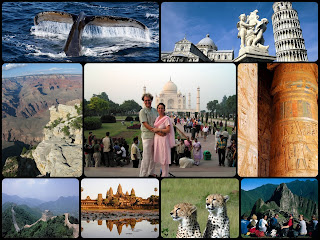
Ganges, Taj andRaj visits two of my favorite Indian sites – the Taj Mahal and Varanasi -
India in a nutshell. If you want to do
all of India in one trip, including Kerala, check out our IndiaExperience.
9.
Best of Cambodiaand Vietnam - Angkor Wat is a must-see and can do easily be combined with
Vietnam. This trip runs in the opposite direction as well.
10.Imperial Chinaand Yangtze River Cruise is arguably our best China trip as it covers Beijing, Shanghai, the Terracotta Warriors and so much more. If you have only two weeks, pick this adventure trip, or this trip with upgraded hotels.
Adventure Travel of course goes beyond these destinations too. The world is your oyster - email me to arrange your own perfect holiday!

Subscribe to:
Posts (Atom)