Here are some great articles and links relating to travel in Malawi, Lesotho and Swaziland.
Lesotho
Breathtaking travels in Lesotho and Swaziland
Souvenir Shopping Tip: Shepherd Bells from Lesotho
Tim Butcher in Lesotho
Malawi
Malawi: Africa's rising star
How I spotted the first Painted Dog in Malawi
How I set up Malawi's premier carnivore conservation project
Wildlife of Malawi: A ride on the wild side
Swaziland
Swaziland: Africa's biggest little secret
Breathtaking travels in Lesotho and Swaziland
Wildlife & nature
Tracking rhinos in Swaziland
How I spotted the first Painted Dog in Malawi
How I set up Malawi's premier carnivore conservation project
Wildlife of Malawi: A ride on the wild side
Showing posts with label africa. Show all posts
Showing posts with label africa. Show all posts
Monday, August 10, 2015

Thursday, August 6, 2015
Benin, Ghana and Togo travel articles
Here are some great articles and links relating to travel in Benin, Ghana and Togo.
Arts, religion & culture
Dark Secrets: Voodoo in Benin
Hip Hop Culture
Joy is round
Benin
Dark Secrets: Voodoo in Benin
The African City That's Built Entirely On Stilts
A Conversation with Djimon Hounsou
Good vibrations - a slow train journey through Benin
A journey to voodoo's beating heart
My Home in Africa
On the Vodun Trail in Benin
Voodoo Festival: tips to experiencing the voodoo that they do in Benin
Ghana
Time to catch Ghana's rising star
Visiting Ghana's notorious village for witches
Outrunning the law in Ghana
Ghosts of Ghana's Gold Coast
The Best Street Markets From Mumbai to Marrakech
Trying (Hard) to Be a Good Man in Africa
Ghana's first farmers' market: 'We need more like this'
Surfing in Ghana: where beats meet beach breaks
Ghana: the new Ibiza for international party set?
On Slavery’s Doorstep in Ghana
The Two Faces of Ghana
Photo essays
Benin's train journey back in time
Togo
A journey to voodoo's beating heart
Top things to do in Togo
West Africa
West Africa's 5 must-visit destinations
Ghana to Nigeria: Taking the good with the bad
A journey to voodoo's beating heart
West Africa's best wildlife parks
Wildlife & nature
Wildlife spotting in Ghana
West Africa's best wildlife parks
Arts, religion & culture
Dark Secrets: Voodoo in Benin
Hip Hop Culture
Joy is round
Benin
Dark Secrets: Voodoo in Benin
The African City That's Built Entirely On Stilts
A Conversation with Djimon Hounsou
Good vibrations - a slow train journey through Benin
A journey to voodoo's beating heart
My Home in Africa
On the Vodun Trail in Benin
Voodoo Festival: tips to experiencing the voodoo that they do in Benin
Ghana
Time to catch Ghana's rising star
Visiting Ghana's notorious village for witches
Outrunning the law in Ghana
Ghosts of Ghana's Gold Coast
The Best Street Markets From Mumbai to Marrakech
Trying (Hard) to Be a Good Man in Africa
Ghana's first farmers' market: 'We need more like this'
Surfing in Ghana: where beats meet beach breaks
Ghana: the new Ibiza for international party set?
On Slavery’s Doorstep in Ghana
The Two Faces of Ghana
Benin's train journey back in time
Togo
A journey to voodoo's beating heart
Top things to do in Togo
West Africa
West Africa's 5 must-visit destinations
Ghana to Nigeria: Taking the good with the bad
A journey to voodoo's beating heart
West Africa's best wildlife parks
Wildlife & nature
Wildlife spotting in Ghana
West Africa's best wildlife parks
Thursday, July 16, 2015
- 17 Questions you will ask about gorilla trekking in Africa
This post has been moved to our new blog
11 Questions you will ask when planning your African safari
When you plan your safari, there will be lots of questions you have. Here are eleven of the most commonly asked questions about going on an African safari.
1) Which countries are the best to go on safari in Africa?
Kenya, Tanzania, Botswana and South Africa are the most popular African countries to go on safari. Kenya and Tanzania offer the traditional open grasslands, making it possible to see large heard of game from a great distance, including the Wildebeest Migration. Botswana and South Africa have more bushland, but also offer a more Western infrastructure and plenty of opportunities to get away from the crowds by staying in private game reserves.
For a more off-the-beaten-track experience, consider a walking safari in Zambia, or a trip to Northern Namibia or Zimbabwe.
2) Is it safe to go on safari in Africa?
Politically Tanzania, Botswana, Namibia and South Africa are some of the safest destinations in Africa, if not the world. Kenya does have it's share of issues, but these tend to occur in the far north, well away from places travellers go.
Most camps and lodges do not have fences fencing themselves off from the surrounding bush. Wildlife can and will stray into the park, but this only heightens the excitement and feeling of being in deepest Africa.
As far as the actual activities go, boating, canoeing, horseback riding and walking to name but a few, while none of them are as safe as staying at home, you will be in the hands of professional guides who will keep you safe so you can enjoy your journey.
3) Is an African safari expensive?
The more comfort you get and the more exclusive your African safari experience, the higher the price. Camping safaris in Africa are the lowest cost (they start at US$200 per person per night), but it entails sleeping in small tents on bed rolls and often you are expected to help with camp duties.
On the other end of the scale, a fly-in safari to a luxury camp deep in the Botswana wilderness can easily set you back US$1000 per person per night.
Keeping mind though that these prices typically include all your transport, accommodation, meals, guiding and park fees. The more exclusive camps also include a good range of domestic and premium drinks.
4) How long should I go on an African safari?
Theoretically you can go ion safari in Africa for as short as one week. But by the time you have flown to Africa, you will likely only have 3-4 days in destination, before you have to return home.
The ideal time is 2-3 weeks. Two weeks is an ideal time to see the best parks of Kenya and Tanzania, or to visit Botswana or see the highlights of South Africa, including Kruger National Park.
Three weeks will allow you to add the beautiful beaches of Zanzibar or a gorilla trek to your East African safari, while in Southern Africa you could add the delightful city of Cape Town and Kruger National Park to your Botswana safari.
5) When is the best time to go on a safari in Africa?
For your first safari in Africa, choose the dry season, as it is the time when there are few leaves on the trees and animals congregate around the little water available. The dry season runs from April through October in Southern Africa. In Kenya and Tanzania, there are two dry seasons. The long dry season stretches from June through October, while the short dry season falls in January and February.
On the other hand, the green (wet) season, comes with a number of advantages. Fewer people means lower prices. It is a great time for bird-watching, and lush landscapes and flowers abound. Skies with towering clouds make for dramatic photography, while animals get their babies, which makes for endearing photos and great predator activity
For more on the topic, see The Best time to go on your African safari.
6) What shots do I need to travel to Africa?
Strictly speaking, most countries do not make having shots mandatory. Diseases that commonly occur in Africa are cholera, hepatitis A, malaria and typhoid fever, among others.
The one shot that some countries make mandatory is yellow fever. At the time of writing this was mandatory when crossing borders between Kenya, Uganda, Rwanda and Tanzania.
As the situation on diseases is very fluid I strongly recommend you consult with a good travel health specialist well before setting out on your African safari.
7) Should I bring a mosquito net on my African safari?
If you are on a lodge safari, you do not as lodges will supply you with either an air-conditioned (mosquito proof) room, or a tent with built-in mosquito net.
If you are on a camping safari, you are likely to keep your tent closed, so the only reason you would bring a mosquito net is if you wanted to sleep in the outdoors.
8) What visa do I need for my trip to Africa?
For most nationalities visa are not required to travel to Southern Africa. For East Africa most nationalities do need a visa. As the visa requirements always change, I would strongly suggest you consult your travel agent.
Some countries, such as South Africa and Namibia require you to have at least two blank pages side-by-side in your passport.
9) How much money and what currency should I bring on my holiday in Africa?
If you keep in mind that most of your meals are included, your main expense is for on-the-spot visa, a few meals that are not included, drinks and souvenirs. Budget the same price as you would pay at home for souvenirs, tips, meals and drinks, and you will have enough money.
You know your own shopping and eating/drinking habits, so budget accordingly.
Do bring excess funds with you in case of emergencies, some in cash and some in the form of credit cards.
Bring your funds in cash US$. While traveler's cheques are protected against theft, they are harder and more costly to exchange. Credit cards can be used in more expensive shops but not for normal day-to-day transactions.
10) How much should I tip
This depends on the type of trip you are on. For low-cost camping safaris, budget $5 per guest per day for the guide and $2 per guest per day for auxiliary staff such as cooks and trackers.
On luxury safaris these amounts should go up to US$10 and US$5-7 per guest per day respectively.
11) What should I wear
Bring comfortable, casual wash and wear clothes. Muted colours are recommended for game-viewing. Whites are a no-no as this is an alarm colour in nature.
Game-drives take place early morning and late afternoon which can be cold, especially in winter in Southern Africa (June-August) - bring a light jacket or sweater.
Shirts with long sleeves give protection against mosquitoes and the sun. Zip-off pants give you the option to wear them as long pants in the morning and convert them to short during the hot hours of the day. T shirts and shorts or a light skirt will keep you cool when it is hot.
A lightweight water-proof jacket is recommended if you travel during the green season.
Don't forget swim and beachwear as most lodges have pools.
Comfortable walking shoes, sunscreen, sunglasses, hat, insect repellent, moisturizer and lip-balm are all essentials.
Most lodges and hotels will arrange for same-day or overnight laundry service. For cultural reasons, some lodges and camps do not wash underwear.
For more information on what to bring on your African safari, please click here.
Related posts
What to bring on your African safari
Highlights of Kenya
Wildebeest Migration
The Best time to go on your African safari
17 Questions you will ask about gorilla trekking in Africa
Feedback from South Africa and Botswana
Serengeti & Zanzibar feedback
Feedback from Africa
Feedback from South Africa
1) Which countries are the best to go on safari in Africa?
Kenya, Tanzania, Botswana and South Africa are the most popular African countries to go on safari. Kenya and Tanzania offer the traditional open grasslands, making it possible to see large heard of game from a great distance, including the Wildebeest Migration. Botswana and South Africa have more bushland, but also offer a more Western infrastructure and plenty of opportunities to get away from the crowds by staying in private game reserves.
For a more off-the-beaten-track experience, consider a walking safari in Zambia, or a trip to Northern Namibia or Zimbabwe.
2) Is it safe to go on safari in Africa?
Politically Tanzania, Botswana, Namibia and South Africa are some of the safest destinations in Africa, if not the world. Kenya does have it's share of issues, but these tend to occur in the far north, well away from places travellers go.
Most camps and lodges do not have fences fencing themselves off from the surrounding bush. Wildlife can and will stray into the park, but this only heightens the excitement and feeling of being in deepest Africa.
As far as the actual activities go, boating, canoeing, horseback riding and walking to name but a few, while none of them are as safe as staying at home, you will be in the hands of professional guides who will keep you safe so you can enjoy your journey.
3) Is an African safari expensive?
The more comfort you get and the more exclusive your African safari experience, the higher the price. Camping safaris in Africa are the lowest cost (they start at US$200 per person per night), but it entails sleeping in small tents on bed rolls and often you are expected to help with camp duties.
On the other end of the scale, a fly-in safari to a luxury camp deep in the Botswana wilderness can easily set you back US$1000 per person per night.
Keeping mind though that these prices typically include all your transport, accommodation, meals, guiding and park fees. The more exclusive camps also include a good range of domestic and premium drinks.
4) How long should I go on an African safari?
Theoretically you can go ion safari in Africa for as short as one week. But by the time you have flown to Africa, you will likely only have 3-4 days in destination, before you have to return home.
The ideal time is 2-3 weeks. Two weeks is an ideal time to see the best parks of Kenya and Tanzania, or to visit Botswana or see the highlights of South Africa, including Kruger National Park.
Three weeks will allow you to add the beautiful beaches of Zanzibar or a gorilla trek to your East African safari, while in Southern Africa you could add the delightful city of Cape Town and Kruger National Park to your Botswana safari.
5) When is the best time to go on a safari in Africa?
For your first safari in Africa, choose the dry season, as it is the time when there are few leaves on the trees and animals congregate around the little water available. The dry season runs from April through October in Southern Africa. In Kenya and Tanzania, there are two dry seasons. The long dry season stretches from June through October, while the short dry season falls in January and February.
On the other hand, the green (wet) season, comes with a number of advantages. Fewer people means lower prices. It is a great time for bird-watching, and lush landscapes and flowers abound. Skies with towering clouds make for dramatic photography, while animals get their babies, which makes for endearing photos and great predator activity
For more on the topic, see The Best time to go on your African safari.
6) What shots do I need to travel to Africa?
Strictly speaking, most countries do not make having shots mandatory. Diseases that commonly occur in Africa are cholera, hepatitis A, malaria and typhoid fever, among others.
The one shot that some countries make mandatory is yellow fever. At the time of writing this was mandatory when crossing borders between Kenya, Uganda, Rwanda and Tanzania.
As the situation on diseases is very fluid I strongly recommend you consult with a good travel health specialist well before setting out on your African safari.
7) Should I bring a mosquito net on my African safari?
If you are on a lodge safari, you do not as lodges will supply you with either an air-conditioned (mosquito proof) room, or a tent with built-in mosquito net.
If you are on a camping safari, you are likely to keep your tent closed, so the only reason you would bring a mosquito net is if you wanted to sleep in the outdoors.
8) What visa do I need for my trip to Africa?
For most nationalities visa are not required to travel to Southern Africa. For East Africa most nationalities do need a visa. As the visa requirements always change, I would strongly suggest you consult your travel agent.
Some countries, such as South Africa and Namibia require you to have at least two blank pages side-by-side in your passport.
9) How much money and what currency should I bring on my holiday in Africa?
If you keep in mind that most of your meals are included, your main expense is for on-the-spot visa, a few meals that are not included, drinks and souvenirs. Budget the same price as you would pay at home for souvenirs, tips, meals and drinks, and you will have enough money.
You know your own shopping and eating/drinking habits, so budget accordingly.
Do bring excess funds with you in case of emergencies, some in cash and some in the form of credit cards.
Bring your funds in cash US$. While traveler's cheques are protected against theft, they are harder and more costly to exchange. Credit cards can be used in more expensive shops but not for normal day-to-day transactions.
10) How much should I tip
This depends on the type of trip you are on. For low-cost camping safaris, budget $5 per guest per day for the guide and $2 per guest per day for auxiliary staff such as cooks and trackers.
On luxury safaris these amounts should go up to US$10 and US$5-7 per guest per day respectively.
11) What should I wear
Bring comfortable, casual wash and wear clothes. Muted colours are recommended for game-viewing. Whites are a no-no as this is an alarm colour in nature.
Game-drives take place early morning and late afternoon which can be cold, especially in winter in Southern Africa (June-August) - bring a light jacket or sweater.
Shirts with long sleeves give protection against mosquitoes and the sun. Zip-off pants give you the option to wear them as long pants in the morning and convert them to short during the hot hours of the day. T shirts and shorts or a light skirt will keep you cool when it is hot.
A lightweight water-proof jacket is recommended if you travel during the green season.
Don't forget swim and beachwear as most lodges have pools.
Comfortable walking shoes, sunscreen, sunglasses, hat, insect repellent, moisturizer and lip-balm are all essentials.
Most lodges and hotels will arrange for same-day or overnight laundry service. For cultural reasons, some lodges and camps do not wash underwear.
For more information on what to bring on your African safari, please click here.
Related posts
What to bring on your African safari
Highlights of Kenya
Wildebeest Migration
The Best time to go on your African safari
17 Questions you will ask about gorilla trekking in Africa
Feedback from South Africa and Botswana
Serengeti & Zanzibar feedback
Feedback from Africa
Feedback from South Africa
What to bring on your African safari
Having previously written about the best time to go on your African Safari, now that you are going you may wonder what you need to bring on your African safari.
I
am going to assume you will be provided with basics like your camping equipment or good-quality lodge or tented camp accommodation and you have booked your holiday through a reputable safari operator.
Do I need to bring a mosquito net on my safari in Africa
The
most asked question about what to bring on your African safari is – do I
need to bring a mosquito net. The short answer is no. If you are
staying in good-quality accommodation, these will provide mosquito nets,
or air-conditioned rooms. If you are camping, your tent will have nets
built in (just keep your tent closed when you can). The only time you
would want to bring a mosquito net is if you plan to sleep in the
outdoors a lot. If you are on a camping safari and there is the option
to sleep under a tree or on top of the truck (where you are out of reach
of anything that doesn’t fly), I recommend you do it, but do sleep
under a net.
What color clothing should I bring on my African safari?
We
have all seen documentaries and movies about Africa and you will notice
many people wear Khaki clothing. But is it necessary to purchase an
entire new wardrobe just to look like you are on safari? I mean, you
ARE on safari, so do you need to look the part? The answer is “only if
you want to”. Just as long as you do not show up in bright colours, you
are OK. White is also a no-no. Think of deer and how they lift up
their tail when they are on the run. White is an alarm color and
scares animals off.
Many
people do opt to wear khaki as it is the one colour that shows the
least amount of dirt. And with laundry facilities not always at hand,
being able to wear your clothes longer is a bonus.
Camouflage colours are a no-no in many countries as you may be mistaken for military personnel.
What type of clothing should I bring on my safari in Africa?
Bring
anything that is cool, loose-fitting and comfortable. Mornings on
safari can be cool, so zip-off pants are great to wear as long pants in
the morning and as shorts in the afternoon. If you layer you can use
multiple pieces of clothing to stay warm at night, but use them as
individual garments at warmer times.
Bring a set of smarter clothes for meal times if you are staying in more upscale accommodation.
Do I need weather protection on my safari in Africa?
You
may be out for long stretches at a time, either on game drives or game
walks. Be sure to bring adequate sun protection such as a wide-brimmed
hat and sun block.
A
light rain jacket may be useful too if you travel in the green (wet) season. For cooler days and cold nights, bring a wind breaker or
pullover.
What shoes should I bring on my African safari?
If
you plan to travel during the green (wet) season, closed-toe shoes will
keep your feet dry. If your itinerary includes a lot of walks, be sure
to bring sturdy shoes – the African bush is littered with sharp thorns
that will penetrate all but the thickest soles. For game drives and
around camp, comfortable sandals are the way to go. If you like to
dress up for dinner, bring appropriate shoes.
Health
Be
sure to check with a travel health specialist about what shots you
need. Some African countries require you to have had a yellow fever
inocculation in order to enter the country.
There
are long lists of pills people will advise you to take. Ask yourself
what kind of trip you are doing. If you are staying in high-end lodges,
what are the chances of you getting traveller’s diarhea? If you are on
a walking safari, what are the chances of you getting motion sick? If
you are in the dry season, what are the chances of getting insect-borne
diseases? And finally, all those pills you bring, do you really feel
comfortable administering them yourself without medical consultation?
Consider
bringing a small kit with plasters, travel sickness tablets, antiseptic
cream, antihistamine cream, pain relievers, sunscreen, eye drops. If
you have allergies or a medical condition, pack the required medication.
Insect repellent and moisturizer are essentials.
If
you are concerned about safe drinking water, but also worry about where
your disposable plastic bottles will end up, bring water purification
drops or a filter with you.
Photography
A
good telelens is a must when you go on safari in Africa. If all you bring is a standard 50mm lens, you
will find when you come home that all your animal shots taken on your African safari will have only
tiny blips of beasts on them. Most simple digital cameras come with at
least a 12x optical zoom, which is fine for good close-ups. Try to
avoid using your digital zoom as it will often lead to pixilated shots.
Do bring wide-angle lenses as well, as some of the landscapes &
skies in Africa will really stand out when shot with a good wide-angle.
Professional photographers will bring a bean bag to keep their camera steady, but these are heavy.
Be
sure to bring enough memory cards and a recharger with
converter/adapter and enough batteries – not every overnight stop will
allow you to charge our batteries. If you have a plug that allows you
to charge batteries on the cigarette lighter of a vehicle – bring it.
If you are planning to buy a camera, check out this camera review site.
Other must-brings on your safari in Africa
Binoculars are great to study far-off wildlife and birds on your African safari.
To
learn more about the wildlife you are seeing, be sure to hire a great
guide. In the absence of one, bring a good guide book. Similarly,
books about plants or insects or a good novel set in your destination,
will give an extra dimension to your trip.
Bring swim and beach wear if your trip includes time on a beach or around a pool.
Finally, don’t forget your health and cancellation insurance policies, passport and visa, cash US$ and bank & credit cards.
Related posts
Highlights of Kenya
If you are planning a safari, Kenya is an obvious choice - an excellent infrastructure of good lodges, plenty of parks all within a day's drive from the capital, and lots of wildlife. Read on for the highlights of a safari in Kenya.
Nairobi is the capital of Kenya, a bustling metropolis with good markets, restaurants and a few sights. Consider staying two nights - it will allow you to get over your jet-lag as well as creating a buffer day in case of flight delays. Use the extra day to look around the city - the Giraffe Center where you get up-close to these wonderful animals, and Karen Blixen's House, home of the author of "Out of Africa" are nice spots to explore on a leisurely day.
The next day, set off on your African safari! Many companies still insist on visiting Aberdares National Park and stay at lodges such as The Ark or Treetops. While there is something to be said to stay at African safari lodges frequented by high-society, game viewing is limited here. My suggestion is you make a beeline for Samburu National Reserve in the centre of the country. This safari park sits in arid lands on both sides of the Ewaso Ng'iro river, which provides a year-round water source for game. Some of those animals are unique to this part of Kenya - reticulated giraffe and Grevy's zebra among others. But what you will remember the park for are the numbers of gerenuks, antelopes with very long necks, and the dik dik, a tiny antelope which seems to be everywhere.
After Samburu, turn south. If you are travelling by road and are headed for Lake Nakuru, Ol Pejeta Conservancy is a convenient overnight safari stop. While there, visit the chimpanzee sanctuary, or see some of the black and northern white rhino the conservancy aims to protect.
In the south-west of the country lie some of Kenya's most famous game reserves. First and foremost among them is Masai Mara National Reserve, dubbed Africa's greatest game reserve (as it is connected with Tanzania's Serengeti I would argue that both of them combined form Africa's greatest reserve). Picture rolling hills covered in grass with millions of animals grazing, pursued by predators such as lion, leopard and cheetah. In August, September and October the area hosts the annual Wildebeest Migration, called by many the Greatest Show on Earth and high on the list of many safari seekers. The Mara truly is Kenya's Noah's Ark and whether you stay in one of the lodges or tented camps within the park, or on a private concession outside of it, you are sure to have a safari par excellence.
Lake Nakuru National Park is a convenient stop halfway the Mara and Nairobi. Most people stay one night and marvel at the huge flocks of flamingos gracing it's shores (they are replaced by pelicans in the wet season). It is also a great spot to see white and black rhino and each time I visited I have seen leopard. Birds abound and the views from the top of the escarpment overlooking the lake are amazing.
There are many more parks in Kenya - Amboseli is famous for the classic photos of elephants with Kilimanjaro (across the border in Tanzania) in the background. Tsavo East and West, combined forming one of the largest protected landmasses in the world, are little visited. It is here that you can experience a true African Wilderness and the country's largest elephant population.
Down on the coast are the resorts south of Mombasa, while further north the delightful Swahili town of Lamu beckons. Snorkelling is amazing in both, while Lamu offers a chance to enjoy Swahili culture little touched by the modern world.
No matter where you go in Kenya, you are sure to have a wonderful safari!
Related posts:
Best time to go on safari
The annual Wildebeest Migration
Feedback from Africa
Kenya & Tanzania - interesting articles
Kenya reading list
Nairobi is the capital of Kenya, a bustling metropolis with good markets, restaurants and a few sights. Consider staying two nights - it will allow you to get over your jet-lag as well as creating a buffer day in case of flight delays. Use the extra day to look around the city - the Giraffe Center where you get up-close to these wonderful animals, and Karen Blixen's House, home of the author of "Out of Africa" are nice spots to explore on a leisurely day.
The next day, set off on your African safari! Many companies still insist on visiting Aberdares National Park and stay at lodges such as The Ark or Treetops. While there is something to be said to stay at African safari lodges frequented by high-society, game viewing is limited here. My suggestion is you make a beeline for Samburu National Reserve in the centre of the country. This safari park sits in arid lands on both sides of the Ewaso Ng'iro river, which provides a year-round water source for game. Some of those animals are unique to this part of Kenya - reticulated giraffe and Grevy's zebra among others. But what you will remember the park for are the numbers of gerenuks, antelopes with very long necks, and the dik dik, a tiny antelope which seems to be everywhere.
After Samburu, turn south. If you are travelling by road and are headed for Lake Nakuru, Ol Pejeta Conservancy is a convenient overnight safari stop. While there, visit the chimpanzee sanctuary, or see some of the black and northern white rhino the conservancy aims to protect.
In the south-west of the country lie some of Kenya's most famous game reserves. First and foremost among them is Masai Mara National Reserve, dubbed Africa's greatest game reserve (as it is connected with Tanzania's Serengeti I would argue that both of them combined form Africa's greatest reserve). Picture rolling hills covered in grass with millions of animals grazing, pursued by predators such as lion, leopard and cheetah. In August, September and October the area hosts the annual Wildebeest Migration, called by many the Greatest Show on Earth and high on the list of many safari seekers. The Mara truly is Kenya's Noah's Ark and whether you stay in one of the lodges or tented camps within the park, or on a private concession outside of it, you are sure to have a safari par excellence.
Lake Nakuru National Park is a convenient stop halfway the Mara and Nairobi. Most people stay one night and marvel at the huge flocks of flamingos gracing it's shores (they are replaced by pelicans in the wet season). It is also a great spot to see white and black rhino and each time I visited I have seen leopard. Birds abound and the views from the top of the escarpment overlooking the lake are amazing.
There are many more parks in Kenya - Amboseli is famous for the classic photos of elephants with Kilimanjaro (across the border in Tanzania) in the background. Tsavo East and West, combined forming one of the largest protected landmasses in the world, are little visited. It is here that you can experience a true African Wilderness and the country's largest elephant population.
Down on the coast are the resorts south of Mombasa, while further north the delightful Swahili town of Lamu beckons. Snorkelling is amazing in both, while Lamu offers a chance to enjoy Swahili culture little touched by the modern world.
No matter where you go in Kenya, you are sure to have a wonderful safari!
Related posts:
Best time to go on safari
The annual Wildebeest Migration
Feedback from Africa
Kenya & Tanzania - interesting articles
Kenya reading list
 |
| Cheetahs in the Masai Mara - photo by the author |
Wednesday, April 15, 2015
South Africa articles
Here are some great articles relating to travel in South Africa.
Cape Town
7 cheap things to do in Cape Town
Cape Town's outdoor adventures
Kid-friendly Cape Town
Easy breaks from Cape Town
Eating in Cape Town
Robben Island - World Heritage Guide
48 Hours in Cape Town
Free things to do in Cape Town
Cape Town City Guide
Where to go hiking in Cape Town
Eastern Cape & Garden Route
South Africa's Eastern Cape
Step back in time along the Garden Route
History
In the footsteps of greatness
Johannesburg
Business trip - Johannesburg
Johannesburg' hip transformation
Karoo
In South Africa, Fine-Art Landscapes for Postcard Prices
Arty Eastern Karoo
KwaZulu-Natal & Durban
Exploring KwaZulu - Natal
Top 10 things to do in Durban
Top 10 Culinary Experiences in Durban
Durban City Guide
Winelands
Pouring pints in the Winelands
Cape Town
7 cheap things to do in Cape Town
Cape Town's outdoor adventures
Kid-friendly Cape Town
Easy breaks from Cape Town
Eating in Cape Town
Robben Island - World Heritage Guide
48 Hours in Cape Town
Free things to do in Cape Town
Cape Town City Guide
Where to go hiking in Cape Town
Eastern Cape & Garden Route
South Africa's Eastern Cape
Step back in time along the Garden Route
History
In the footsteps of greatness
Johannesburg
Business trip - Johannesburg
Johannesburg' hip transformation
Karoo
In South Africa, Fine-Art Landscapes for Postcard Prices
Arty Eastern Karoo
KwaZulu-Natal & Durban
Exploring KwaZulu - Natal
Top 10 things to do in Durban
Top 10 Culinary Experiences in Durban
Durban City Guide
Winelands
Pouring pints in the Winelands
Botswana Articles
Here are some great articles relating to travel in Botswana.
Chobe
Safari by water
Kalahari
Botswana's Central Kalahari: Lion Kingdom
Okavango
Okavango Delta: Safari reveals where the wild things are
Canoeing the Okavango Delta
Green Season in Botswana's Okavango Delta
Botswana’s Okavango Delta from a dugout canoe
Wildlife
Raising a leopard
The first rule in tracking lions: No running
Chobe
Safari by water
Kalahari
Botswana's Central Kalahari: Lion Kingdom
Okavango
Okavango Delta: Safari reveals where the wild things are
Canoeing the Okavango Delta
Green Season in Botswana's Okavango Delta
Botswana’s Okavango Delta from a dugout canoe
Wildlife
Raising a leopard
The first rule in tracking lions: No running
Thursday, November 27, 2014
Feedback from South Africa & Botswana
The following feedback is from a group of 20 passengers for whom I had organized a private trip to South Africa, Zimbabwe abd Botswana.
As far as the trip - it was absolutely amazing!!!! Everyone agreed that it has been a trip of a lifetime and I can't think you enough for organizing our journey. I also want to commend your local office as everything was seamless, the hotels we were booked into - all fantastic; the tours were superb; and all pick-ups, buses, etc. all right on time.
We began with the Cape Milner Hotel in Cape Town - a lovely place with great rooms. Although we started with some rainy days we were able to juggle our schedule and visit a couple of the museums - which were very worthwhile visiting. The sun came out for our Robben Island and Cape Peninsula tour - which were definite highlights. Our stop and lunch at La Petite Ferme on the way to Tulbagh was exceptional. And, although we didn't really get to spend much time in Tulbagh, it was a interesting town to see. Knysna Hollow was again great and with the schedule change we were able to have a free morning and afternoon to just relax - something I think we all needed. Really enjoyed the Featherbed Tour (even in the rain!).
Our next major stop was the Kapama Game Reserve and the Buffalo Camp - an outstanding experience and I think probably the highlight of the trip for everyone. I would not hesitate to recommend that camp - the rooms, the staff, the game drives - all absolutely wonderful and having the entire place to ourselves made it even more special. We all got to see the "Big Five" and countless other animals.
The drive back to Johannesburg was another very interesting trip - seeing the countryside and our guide for this part - Marshall was very informative and gave us a good talk on the country. We were caught in another downpour while visiting Soweto, but the rain did stop after our dinner and we were able to walk around and see some of the township and learn a bit of its history.
Flying into Victoria Falls and Zimbabwe was as expected - but at least now they give out water while you wait at immigration!!! Since we were late getting there, it was about 4ish when we toured the Falls and subsequently almost had the place to ourselves. The water is at the low point, but still it is a spectacular place.
Again, our transport into Botswana was smooth and we arrived at the Chobe Bush Lodge in Botswana. Our rooms there were superb, but he lodge definitely showed that they are still very newly opened and have a fair number of "service bugs" to work out. The river cruise was very enjoyable and the game drives exciting - although a totally different feel compared to the S.African private game drives.
Twelve of our group were transported back to Vic Falls for their trip home and the 8 of us continued onto the Okavango via small 5 seater airplanes. I must admit the delta is certainly so worthwhile seeing - you feel like you are truly in the heart of Africa! The water, the birds and animals, the amazing scenery and beautiful skies and sunsets were magical. Gunn's Camp was much more basic than the Kapama Lodge, but very comfortable, the food was good and the staff very friendly.
I am hoping to get into Toronto sometime in the next few weeks and will definitely try to stop by and discuss the trip in more detail and bring some photos (if I can get them down to a manageable number!!).
Thanks again for giving all of us a tremendous holiday.
Take care, Jane - Woodstock, ON, October 2014
Related posts:
Feedback from South Africa
Feedback from Galapagos
Feedback from Asia & New Zealand
Serengeti & Zanzibar feedback
Feedback from Africa
Customer Feedback winter 2014
South Africa Travel Blog
As far as the trip - it was absolutely amazing!!!! Everyone agreed that it has been a trip of a lifetime and I can't think you enough for organizing our journey. I also want to commend your local office as everything was seamless, the hotels we were booked into - all fantastic; the tours were superb; and all pick-ups, buses, etc. all right on time.
We began with the Cape Milner Hotel in Cape Town - a lovely place with great rooms. Although we started with some rainy days we were able to juggle our schedule and visit a couple of the museums - which were very worthwhile visiting. The sun came out for our Robben Island and Cape Peninsula tour - which were definite highlights. Our stop and lunch at La Petite Ferme on the way to Tulbagh was exceptional. And, although we didn't really get to spend much time in Tulbagh, it was a interesting town to see. Knysna Hollow was again great and with the schedule change we were able to have a free morning and afternoon to just relax - something I think we all needed. Really enjoyed the Featherbed Tour (even in the rain!).
Our next major stop was the Kapama Game Reserve and the Buffalo Camp - an outstanding experience and I think probably the highlight of the trip for everyone. I would not hesitate to recommend that camp - the rooms, the staff, the game drives - all absolutely wonderful and having the entire place to ourselves made it even more special. We all got to see the "Big Five" and countless other animals.
The drive back to Johannesburg was another very interesting trip - seeing the countryside and our guide for this part - Marshall was very informative and gave us a good talk on the country. We were caught in another downpour while visiting Soweto, but the rain did stop after our dinner and we were able to walk around and see some of the township and learn a bit of its history.
Flying into Victoria Falls and Zimbabwe was as expected - but at least now they give out water while you wait at immigration!!! Since we were late getting there, it was about 4ish when we toured the Falls and subsequently almost had the place to ourselves. The water is at the low point, but still it is a spectacular place.
Again, our transport into Botswana was smooth and we arrived at the Chobe Bush Lodge in Botswana. Our rooms there were superb, but he lodge definitely showed that they are still very newly opened and have a fair number of "service bugs" to work out. The river cruise was very enjoyable and the game drives exciting - although a totally different feel compared to the S.African private game drives.
Twelve of our group were transported back to Vic Falls for their trip home and the 8 of us continued onto the Okavango via small 5 seater airplanes. I must admit the delta is certainly so worthwhile seeing - you feel like you are truly in the heart of Africa! The water, the birds and animals, the amazing scenery and beautiful skies and sunsets were magical. Gunn's Camp was much more basic than the Kapama Lodge, but very comfortable, the food was good and the staff very friendly.
I am hoping to get into Toronto sometime in the next few weeks and will definitely try to stop by and discuss the trip in more detail and bring some photos (if I can get them down to a manageable number!!).
Thanks again for giving all of us a tremendous holiday.
Take care, Jane - Woodstock, ON, October 2014
Related posts:
Feedback from South Africa
Feedback from Galapagos
Feedback from Asia & New Zealand
Serengeti & Zanzibar feedback
Feedback from Africa
Customer Feedback winter 2014
South Africa Travel Blog
Monday, October 20, 2014
Ebola and travel
Ebola is a scary disease. It stalks people and lies in wait until it overwhelms the patient's immune system and kills a large majority of infected people.
But what are the real risks for travellers? While I would probably stay away from West Africa at this time, here are some of the facts you should consider when you travel to any other part of the world:
- Apart from a few isolated cases, all the Ebola cases in the fall of 2014 have been in West Africa. Those cases outside of West Africa were health care workers who had been in close contact with infected people. Travellers are not health care workers.
- Infection occurs from direct contact through broken skin or mucous membranes with the blood, or other bodily fluids or secretions (stool, urine, saliva, semen) of infected people. Infection can also occur if broken skin or mucous membranes of a healthy person come into contact with environments that have become contaminated with an Ebola patient’s infectious fluids such as soiled clothing, bed linen, or used needles. When you ask yourself what the chances are you come into contact with any of these, you realize the chances for travellers are very slim indeed.
- Since the Ebola outbreak began in February, around 300,000 people have died from malaria, while tuberculosis has likely claimed over 600,000 lives. This is not to say Ebola is something the authorities should take lightly, but it does emphasize that the media are blowing the epidemic out of proportion.
- As the World Health Organization has stated - "While travellers should always be vigilant with regard to their health and those around them, the risk of infection for travellers is very low since person-to-person transmission results from direct contact with the body fluids or secretions of an infected patient."
But what are the real risks for travellers? While I would probably stay away from West Africa at this time, here are some of the facts you should consider when you travel to any other part of the world:
- Apart from a few isolated cases, all the Ebola cases in the fall of 2014 have been in West Africa. Those cases outside of West Africa were health care workers who had been in close contact with infected people. Travellers are not health care workers.
- Infection occurs from direct contact through broken skin or mucous membranes with the blood, or other bodily fluids or secretions (stool, urine, saliva, semen) of infected people. Infection can also occur if broken skin or mucous membranes of a healthy person come into contact with environments that have become contaminated with an Ebola patient’s infectious fluids such as soiled clothing, bed linen, or used needles. When you ask yourself what the chances are you come into contact with any of these, you realize the chances for travellers are very slim indeed.
- Since the Ebola outbreak began in February, around 300,000 people have died from malaria, while tuberculosis has likely claimed over 600,000 lives. This is not to say Ebola is something the authorities should take lightly, but it does emphasize that the media are blowing the epidemic out of proportion.
- As the World Health Organization has stated - "While travellers should always be vigilant with regard to their health and those around them, the risk of infection for travellers is very low since person-to-person transmission results from direct contact with the body fluids or secretions of an infected patient."
Thursday, October 16, 2014
Serengeti & Zanzibar feedback
Krisha S from Toronto shared the following feedback:
The entire trip was memorable and fun! From the time I arrived at the Kilimanjaro Airport to the time I left Zanzibar to return home, I was treated with the utmost courtesy by your staff. They catered to my every need, including stopping in markets to purchase a few items. They were very accommodating and helpful.
It was my dream to visit the Serengeti & Zanzibar and these folks made my trip even more memorable. Emmanuel, our guide is very knowledgeable, professional, friendly and fun! It was a pleasure touring the Serengeti, Tarangire NP and Ngorongoro Crater with him, Agnes & Brian (the other couple on our tour of 3 people). We had a lot of fun!
I also loved the accommodations during my trip. All were unique, impressive, modern and included all amenities I required. It was a thrill to overnight at the Serena Lodges in the Serengeti and Ngorongoro Crater. Staff at every location were helpful and accommodating, no complaints at all!
Krishna travelled on our Tanzania Wildlife Highlights & Zanzibar Discovered tour. Contact me for more information.
Related posts:
The Annual Wildebeest Migration
The Best time to go on your African Safari
Feedback from South Africa
Feedback from Galapagos
Feedback from Asia & New Zealand
Feedback from Africa
Customer Feedback winter 2014
The entire trip was memorable and fun! From the time I arrived at the Kilimanjaro Airport to the time I left Zanzibar to return home, I was treated with the utmost courtesy by your staff. They catered to my every need, including stopping in markets to purchase a few items. They were very accommodating and helpful.
It was my dream to visit the Serengeti & Zanzibar and these folks made my trip even more memorable. Emmanuel, our guide is very knowledgeable, professional, friendly and fun! It was a pleasure touring the Serengeti, Tarangire NP and Ngorongoro Crater with him, Agnes & Brian (the other couple on our tour of 3 people). We had a lot of fun!
I also loved the accommodations during my trip. All were unique, impressive, modern and included all amenities I required. It was a thrill to overnight at the Serena Lodges in the Serengeti and Ngorongoro Crater. Staff at every location were helpful and accommodating, no complaints at all!
Krishna travelled on our Tanzania Wildlife Highlights & Zanzibar Discovered tour. Contact me for more information.
Related posts:
The Annual Wildebeest Migration
The Best time to go on your African Safari
Feedback from South Africa
Feedback from Galapagos
Feedback from Asia & New Zealand
Feedback from Africa
Customer Feedback winter 2014
Friday, May 30, 2014
Feedback from Africa
One of the things we excel at here at Adventure Center is planning personalized trips for people. Be it a honeymoon, a group of friends travelling together, or a celebratory trip.
Or, a grand tour of Africa, after a bout with cancer.
I have two clients doing such a trip right now and they had such a fabulous time, they felt inspired to send me a message from their hotel room...
"We wanted to thank you for everything you did to make the African portion of our "f--k cancer trip" so amazing. We are currently sitting at Ghost Mountain Inn and cannot believe the luxury of our room - it is bigger than our Toronto home was!
We also greatly enjoyed our three nights at Falaza (what a lovely property!) and our time in the Drakensberg was also fabulous. The room at Cathedral Peak was a bit of heaven on cool "winter" nights.
Thanks again for everything, M & R"
Feedback from South Africa
Feedback from Galapagos
Feedback from Asia & New Zealand
Serengeti & Zanzibar feedback
Customer Feedback winter 2014
Or, a grand tour of Africa, after a bout with cancer.
I have two clients doing such a trip right now and they had such a fabulous time, they felt inspired to send me a message from their hotel room...
"We wanted to thank you for everything you did to make the African portion of our "f--k cancer trip" so amazing. We are currently sitting at Ghost Mountain Inn and cannot believe the luxury of our room - it is bigger than our Toronto home was!
We also greatly enjoyed our three nights at Falaza (what a lovely property!) and our time in the Drakensberg was also fabulous. The room at Cathedral Peak was a bit of heaven on cool "winter" nights.
Thanks again for everything, M & R"
Feedback from South Africa
Feedback from Galapagos
Feedback from Asia & New Zealand
Serengeti & Zanzibar feedback
Customer Feedback winter 2014
Thursday, May 22, 2014
Why we do not ride elephants
We are happy to share with you we will no longer offer elephant rides to travellers.
Seeing wild animals on holiday should be a once in a lifetime experience. But the demand for elephant rides, lion and tiger selfies and more is forcing iconic wild animals into a lifetime of misery. Sadly it is these iconic animals that often suffer the most at the hands of a cruel and relentless industry.
More than 2,000 elephants are trapped at cruel tourist attractions where they are undergoing great physical and mental trauma to be forced into interacting with people. Watch this animation and learn about their lives as entertainers.
Our decision is based on an extensive research project by experts from Canadian animal charity WSPA to assess the welfare of captive elephants (and other wildlife) at entertainment venues in Asia and Africa.
Asian elephants are highly endangered and tourism demand has led to the establishment of venues where elephants are forced to do unnatural performances. The demand from travellers is adding to the number of endangered elephants being poached from the wild.
In both Asia and Africa animals are taken from their mothers, their spirit is broken, and they endure cruel and stressful ‘training’ to make them tolerate being ridden.
Clearly this is not something anyone will want to be involved in.
With your help we can stop these cruel practices.
 |
| Elephants are best seen in the wild, like here in Periyar, India |
Thursday, February 13, 2014
Sunday, December 22, 2013
Morocco Vegetable Curry
 |
| Curry Marrakesh - photo courtesy of allrecipes.com |
Ingredients - makes 6 servings
1 sweet potato, peeled and cubed
1 medium eggplant, cubed
1 green bell pepper, chopped
1 red bell pepper, chopped
2 carrots, chopped
1 onion, chopped
6 tablespoons olive oil
3 cloves garlic, minced
1 teaspoon ground turmeric
1 tablespoon curry powder
1 teaspoon ground cinnamon
3/4 teaspoon sea salt
3/4 teaspoon cayenne pepper
1 (15 ounce) can garbanzo beans, drained
1/4 cup blanched almonds
1 zucchini, sliced
2 tablespoons raisins
1 cup orange juice
10 ounces spinach
Directions:
In a large Dutch oven place sweet potato, eggplant, peppers, carrots, onion, and three tablespoons oil. Saute over medium heat for 5 minutes.
In a medium saucepan place 3 tablespoons olive oil, garlic, turmeric, curry powder, cinnamon, salt and pepper and saute over medium heat for 3 minutes.
Pour garlic and spice mixture into the Dutch oven with vegetables in it. Add the garbanzo beans, almonds, zucchini, raisins, and orange juice. Simmer 20 minutes, covered.
Add spinach to pot and cook for 5 more minutes. Serve!
Drink with:
Curries can be paired with a nice bottle of Gewurztraminer.
Friday, November 1, 2013
New hiking and walking trips for 2014
With walking and hiking trips all over the world, we still manage to find some great new trips each year. Here is our line-up of new walking and hiking trips for 2014. For more new trips ideas, click on these blog posts: Cycling, Americas, Europe, Asia, Off-the-beaten-track.
Wildflowers & Waterfalls of the Swiss Alps: the Bernese Oberland is the ideal picturesque setting for scenic walks: glaciers, numerous stunning waterfalls and lush green valleys provide a spectacular backdrop for a relaxing week. All walks are set at a gentle pace leaving plenty of time to admire the 'chocolate box' villages we pass through, or to stop and enjoy a refreshing drink in the warm spring sunshine. Striking wild flowers flourish and carpet the meadows in colourful blankets. Our base for the week is a cosy, traditional Swiss hotel found in the charming village of Wilderswil and we use a mixture of local trains and buses to explore the natural beauty that this stunning region has to offer.
Provence: a stunning part of Provence and relatively untouched by tourism, Greoux les Bains offers the perfect base for a week of gentle daywalks. From our comfortable converted chateau, we explore the region with a mixture of walks from the door or following a short private bus transfer. With the bustling market town of Forcalquier, the dramatic Verdon Gorge and depending on the season, fields of lavender or poppies just a short drive away, there is much to be explored.
Lake Garda, Italy: the contrasting landscape of dramatic mountains, clear water and sandy coves make Lake Garda a wonderful place to visit. Close to the lake, the atmosphere is Mediterranean, with a mild climate supporting palms and lemon groves alongside the olives and vines. Away from the shore craggy mountains rise rapidly and the citrus groves give way to forest and alpine meadows. The multitude of lakeside villages have historically been linked by boat, which we use to explore the area along with a combination of buses and cable car.
Walking Dubrovnik and Montenegro: this walking trip is packed with highlights, combining gentle walks with the very best cultural attractions. We have plenty of time to explore the UNESCO cities of Dubrovnik and Kotor; interspersed with walks in the rolling hills and mountains that surround these cities. Enjoying the azure coastline will also be a priority and we will have the opportunity to appreciate the tranquility of the quiet bays on the idylic island of Lopud. Dubrovnik is a must see for any visitor to this area and with four nights here you will have plenty of time to explore. With gentle walks, fascinating culture and coastal serenity, this trip is the perfect amble towards relaxation.
Walking Malta and Gozo: in the heart of the Mediterranean, lie the beautiful and always sun-kissed Maltese Islands. The bustling island of Malta is home to the oldest megalithic temples on Earth, the UNESCO Old City of Valletta and bucolic inland paths. Leaving Malta behind, the tranquil, verdant island of Gozo, dotted with delightful honey-coloured villages and dramatic coastline, is a paradise for walkers. The hotels used on this holiday have been carefully handpicked for their charming character and unique location, perfect for relaxing after a day of walking.
Namibia, Trekking & Tribes: caught between the Kalahari and the Atlantic Ocean is a country of extreme natural beauty where wildlife roam and some of the continent's most charismatic tribes still live a traditional lifestyle. As well as exploring some of Namibia's highlights such as Etosha N.P. and the world's highest sand dunes at Sossusvlei, we learn about the San Bushmen's hunter/gatherer traditions, visit a Himba village and go on game walks in some of the country's smaller parks.
Trails of Ladakh, India: sandwiched between the western Himalaya, the Karakorum and the Tibetan Plateau, lies the high altitude desert of Ladakh, or 'Little Tibet'. Time in the capital Leh gives us the perfect opportunity to acclimatise as well as exploring the town, Leh Palace and some of the most important monasteries in the area. This fairly gentle trek gives us the chance to enjoy the views and experience village life, in this most remote area of India with its rich culture, where the way of life hasn't changed for centuries.
Trekking in Burma: we visit the magnificent Shwedagon Pagoda, the cultural heart of the nation, and Bagan with its plain of 4000 temples. For our trekking we head to the Chin Hills of north west Burma. This area is home to the ethnic Chin people whose culture and traditions have changed little over the centuries. Women are adorned with tattooed faces and we will stay in monasteries and school houses, immersing ourselves amongst this welcoming culture. Passing forested hills, tea plantations and lush valleys we end the trek with an ascent of Mt Victoria (3063m) for magnificent views of the surrounding area.
Costa Rica - Volcano & Tropical Paradise Walk: follow handpicked walking trails in search of wildlife, waterfalls and outstanding views. From emerald rainforests, smouldering volcanoes and tropical savannah, to steam-fed springs and bubbling mud pools, vibrant Costa Rica is a destination that always delivers. Country tracks or forest trails lead us to a number of waterfalls, where mineral rich water provides the perfect refresher after a day's walking! A visit to Ecotermales Hot Springs near Arenal Volcano is also included to soothe any aching muscles.
Walking Trails of Brazil: giant flattop mountains rise above the grasslands whilst crystal-clear waterfalls, streams, underground rivers, unusual rock formations and caves are scattered between limestone escarpments. This scenery, risen from the ocean and carved by wind, water and time, greets visitors to Brazil's 'Diamond Plateau'. Chapada Diamantina, in the northeast of the country, inland from the colonial capital of Salvador, may be little known but is Brazil's premier trekking destination and its own Lost World.

Wildflowers & Waterfalls of the Swiss Alps: the Bernese Oberland is the ideal picturesque setting for scenic walks: glaciers, numerous stunning waterfalls and lush green valleys provide a spectacular backdrop for a relaxing week. All walks are set at a gentle pace leaving plenty of time to admire the 'chocolate box' villages we pass through, or to stop and enjoy a refreshing drink in the warm spring sunshine. Striking wild flowers flourish and carpet the meadows in colourful blankets. Our base for the week is a cosy, traditional Swiss hotel found in the charming village of Wilderswil and we use a mixture of local trains and buses to explore the natural beauty that this stunning region has to offer.
Provence: a stunning part of Provence and relatively untouched by tourism, Greoux les Bains offers the perfect base for a week of gentle daywalks. From our comfortable converted chateau, we explore the region with a mixture of walks from the door or following a short private bus transfer. With the bustling market town of Forcalquier, the dramatic Verdon Gorge and depending on the season, fields of lavender or poppies just a short drive away, there is much to be explored.
Lake Garda, Italy: the contrasting landscape of dramatic mountains, clear water and sandy coves make Lake Garda a wonderful place to visit. Close to the lake, the atmosphere is Mediterranean, with a mild climate supporting palms and lemon groves alongside the olives and vines. Away from the shore craggy mountains rise rapidly and the citrus groves give way to forest and alpine meadows. The multitude of lakeside villages have historically been linked by boat, which we use to explore the area along with a combination of buses and cable car.
Walking Dubrovnik and Montenegro: this walking trip is packed with highlights, combining gentle walks with the very best cultural attractions. We have plenty of time to explore the UNESCO cities of Dubrovnik and Kotor; interspersed with walks in the rolling hills and mountains that surround these cities. Enjoying the azure coastline will also be a priority and we will have the opportunity to appreciate the tranquility of the quiet bays on the idylic island of Lopud. Dubrovnik is a must see for any visitor to this area and with four nights here you will have plenty of time to explore. With gentle walks, fascinating culture and coastal serenity, this trip is the perfect amble towards relaxation.
Walking Malta and Gozo: in the heart of the Mediterranean, lie the beautiful and always sun-kissed Maltese Islands. The bustling island of Malta is home to the oldest megalithic temples on Earth, the UNESCO Old City of Valletta and bucolic inland paths. Leaving Malta behind, the tranquil, verdant island of Gozo, dotted with delightful honey-coloured villages and dramatic coastline, is a paradise for walkers. The hotels used on this holiday have been carefully handpicked for their charming character and unique location, perfect for relaxing after a day of walking.
Namibia, Trekking & Tribes: caught between the Kalahari and the Atlantic Ocean is a country of extreme natural beauty where wildlife roam and some of the continent's most charismatic tribes still live a traditional lifestyle. As well as exploring some of Namibia's highlights such as Etosha N.P. and the world's highest sand dunes at Sossusvlei, we learn about the San Bushmen's hunter/gatherer traditions, visit a Himba village and go on game walks in some of the country's smaller parks.
Trails of Ladakh, India: sandwiched between the western Himalaya, the Karakorum and the Tibetan Plateau, lies the high altitude desert of Ladakh, or 'Little Tibet'. Time in the capital Leh gives us the perfect opportunity to acclimatise as well as exploring the town, Leh Palace and some of the most important monasteries in the area. This fairly gentle trek gives us the chance to enjoy the views and experience village life, in this most remote area of India with its rich culture, where the way of life hasn't changed for centuries.
Trekking in Burma: we visit the magnificent Shwedagon Pagoda, the cultural heart of the nation, and Bagan with its plain of 4000 temples. For our trekking we head to the Chin Hills of north west Burma. This area is home to the ethnic Chin people whose culture and traditions have changed little over the centuries. Women are adorned with tattooed faces and we will stay in monasteries and school houses, immersing ourselves amongst this welcoming culture. Passing forested hills, tea plantations and lush valleys we end the trek with an ascent of Mt Victoria (3063m) for magnificent views of the surrounding area.
Costa Rica - Volcano & Tropical Paradise Walk: follow handpicked walking trails in search of wildlife, waterfalls and outstanding views. From emerald rainforests, smouldering volcanoes and tropical savannah, to steam-fed springs and bubbling mud pools, vibrant Costa Rica is a destination that always delivers. Country tracks or forest trails lead us to a number of waterfalls, where mineral rich water provides the perfect refresher after a day's walking! A visit to Ecotermales Hot Springs near Arenal Volcano is also included to soothe any aching muscles.
Walking Trails of Brazil: giant flattop mountains rise above the grasslands whilst crystal-clear waterfalls, streams, underground rivers, unusual rock formations and caves are scattered between limestone escarpments. This scenery, risen from the ocean and carved by wind, water and time, greets visitors to Brazil's 'Diamond Plateau'. Chapada Diamantina, in the northeast of the country, inland from the colonial capital of Salvador, may be little known but is Brazil's premier trekking destination and its own Lost World.

Friday, October 25, 2013
Friday, September 13, 2013
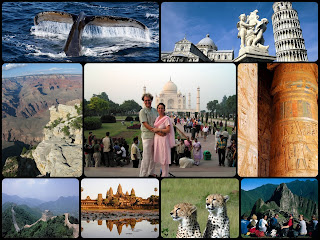
Adventure Trips of a Lifetime
Having been
blessed to have traveled through nearly 100 countries, you often ask me what
the best adventure trip is I have ever done.
So here is a top-ten of trips, in no particular order, I think everyone interested
in adventure travel should do in their life:
1.
National Parks ofthe West –the mountains of Yosemite, stunning Bryce Canyon and Monument
Valley and the awesome Grand Canyon – this USA South-West trip is a gem. We have a walkingtrip too.
2.
Essential Peru
- the mysterious Nazca Lines, Machu Picchu in its incredible setting, spend the
night in an island homestay, and the stunning Colca Canyon. Want to hike the Inca Trail and upgrade your
hotels? Check out this adventure in comfort: Classic Peru.
3.
Falklands, SouthGeorgia & Antarctica – the best trip, the best ship, the best guides,
the best time for the ultimate expedition cruise.
Looking for a shorter trip? - maximize yourtime in Antarctica.
4
4.
Botswana Explorer – the best safari with the best guides and done in the most
intimate way – best of all, no single supplements. E-mail
me for dates and rates.
5.
Kiboko Safari
– showcasing all the best parks in East Africa – ask me how you can get a great deal and still see the famous wildebeest migration.
6.
Egyptology – as of writing this (SEP2013) not a safe destination, but what would a top-ten list be
without it? On this trip you will be
guided by real Egyptologists and stay in 5-star hotels for a great price. See the pyramids and the Valley of the Kings in style!
7.
Best of Italy
– the classic highlights of Italy in a 2-week trip. If you want to experience more variety like
stunning coastlines and small villages, ItalyUncovered is my best bet. Rome, Florence, Tuscany, Umbria, Venice, the Amalfi Coast - they are all waiting for you!
8.
Ganges, Taj andRaj visits two of my favorite Indian sites – the Taj Mahal and Varanasi -
India in a nutshell. If you want to do
all of India in one trip, including Kerala, check out our IndiaExperience.
9.
Best of Cambodiaand Vietnam - Angkor Wat is a must-see and can do easily be combined with
Vietnam. This trip runs in the opposite direction as well.
10.Imperial Chinaand Yangtze River Cruise is arguably our best China trip as it covers Beijing, Shanghai, the Terracotta Warriors and so much more. If you have only two weeks, pick this adventure trip, or this trip with upgraded hotels.
Adventure Travel of course goes beyond these destinations too. The world is your oyster - email me to arrange your own perfect holiday!

Thursday, August 29, 2013
The best time to go on your African safari
You picture yourself watching the sun set over the open African plains, a drink in hand, while a trio of cheetahs is getting ready to go on the hunt. Overhead an African Fish Eagle soars high in the sky. A group of impala stands on guard with their noses in the wind, watching the cheetah's every move.
This is where you have wanted to be all your life, this is where you belong.
But for now you are still in the planning stages, you wonder when the best time is to go on safari and make this dream come true.
If this is your first safari, pick the dry season, when water is scarce and animals congregate around the little water that is available. The later in the dry season you go, the less water there is and the more concentrated the groups of animals you will see.
In broad strokes, the dry season in East Africa (Kenya, Uganda and Northern Tanzania) runs from June through October and from Christmas through February. South from there, in Southern Africa, the dry season runs from April through October.
Advantages of going on safari in the dry season are:
• animals can easily be spotted
• there are few mosquitoes around
• golden-yellow vegetation makes for nice sunset photos
• traveling is easier as roads are dry
Does that mean one should not travel in the green season? I have seen some phenomenal wildlife encounters during the rains - witness the photo below which I shot in the Masai Mara in April, when I was able to track these magnificent animals for an hour.
Benefits of going on safari in the green season are:
• fewer people about
• lower prices
• water based safaris (such as river cruises), not always available in the dry season, can add to your experience
• waterfalls such as Victoria Falls are at their most impressive
• great time for bird-watching, adding a dimension to your safari
• lush landscapes and flowers abound
• skies with towering clouds make for dramatic photography
• animals get their babies, which makes for endearing photos and great predator activity
• the south and central Serengeti in Tanzania hosts the wildebeest migration from December through March
• the best time to visit Cape Town and the Garden Route is October through April
Broken down by the month, here are the safari areas you should go:
• January - East Africa
• February - Kenya, Uganda and Northern Tanzania
• March - Kenya, Northern Tanzania
• April - a good time to look for discounted safaris
• May - Southern Africa
• June - Southern Africa
• July - East and Southern Africa
• August - East and Southern Africa
• September - East and Southern Africa
• October - East and Southern Africa
• November - Kenya, Northern Tanzania
• December - East Africa
First time visitors will likely want to travel during the dry season and spot the Big Five. But if you are looking for a more all-round safari, definitely consider the green season.
Related posts:
What to bring on your African safari
Highlights of Kenya
Wildebeest Migration
Feedback from South Africa and Botswana
Serengeti & Zanzibar feedback
Feedback from Africa
Feedback from South Africa

This is where you have wanted to be all your life, this is where you belong.
But for now you are still in the planning stages, you wonder when the best time is to go on safari and make this dream come true.
If this is your first safari, pick the dry season, when water is scarce and animals congregate around the little water that is available. The later in the dry season you go, the less water there is and the more concentrated the groups of animals you will see.
In broad strokes, the dry season in East Africa (Kenya, Uganda and Northern Tanzania) runs from June through October and from Christmas through February. South from there, in Southern Africa, the dry season runs from April through October.
Advantages of going on safari in the dry season are:
• animals can easily be spotted
• there are few mosquitoes around
• golden-yellow vegetation makes for nice sunset photos
• traveling is easier as roads are dry
Does that mean one should not travel in the green season? I have seen some phenomenal wildlife encounters during the rains - witness the photo below which I shot in the Masai Mara in April, when I was able to track these magnificent animals for an hour.
Benefits of going on safari in the green season are:
• fewer people about
• lower prices
• water based safaris (such as river cruises), not always available in the dry season, can add to your experience
• waterfalls such as Victoria Falls are at their most impressive
• great time for bird-watching, adding a dimension to your safari
• lush landscapes and flowers abound
• skies with towering clouds make for dramatic photography
• animals get their babies, which makes for endearing photos and great predator activity
• the south and central Serengeti in Tanzania hosts the wildebeest migration from December through March
• the best time to visit Cape Town and the Garden Route is October through April
Broken down by the month, here are the safari areas you should go:
• January - East Africa
• February - Kenya, Uganda and Northern Tanzania
• March - Kenya, Northern Tanzania
• April - a good time to look for discounted safaris
• May - Southern Africa
• June - Southern Africa
• July - East and Southern Africa
• August - East and Southern Africa
• September - East and Southern Africa
• October - East and Southern Africa
• November - Kenya, Northern Tanzania
• December - East Africa
First time visitors will likely want to travel during the dry season and spot the Big Five. But if you are looking for a more all-round safari, definitely consider the green season.
Related posts:
What to bring on your African safari
Highlights of Kenya
Wildebeest Migration
Feedback from South Africa and Botswana
Serengeti & Zanzibar feedback
Feedback from Africa
Feedback from South Africa

Subscribe to:
Posts (Atom)